

The demonstration of the protest day of April 25 has criticized the “sectarian” governments and vindicated the Valencian language and public services such as healthcare. “We want a country with a future, democratic and free,” he proclaimed. In this way, speaking to the media before starting the march, the president of Acció Cultural del País Valencià (APCV), Anna Oliver, has emphasized the Valencian language and culture “capable of bringing together transversal struggles from sustainability and the demand for the protection of the garden to public services, such as public health, through democratic memory.”
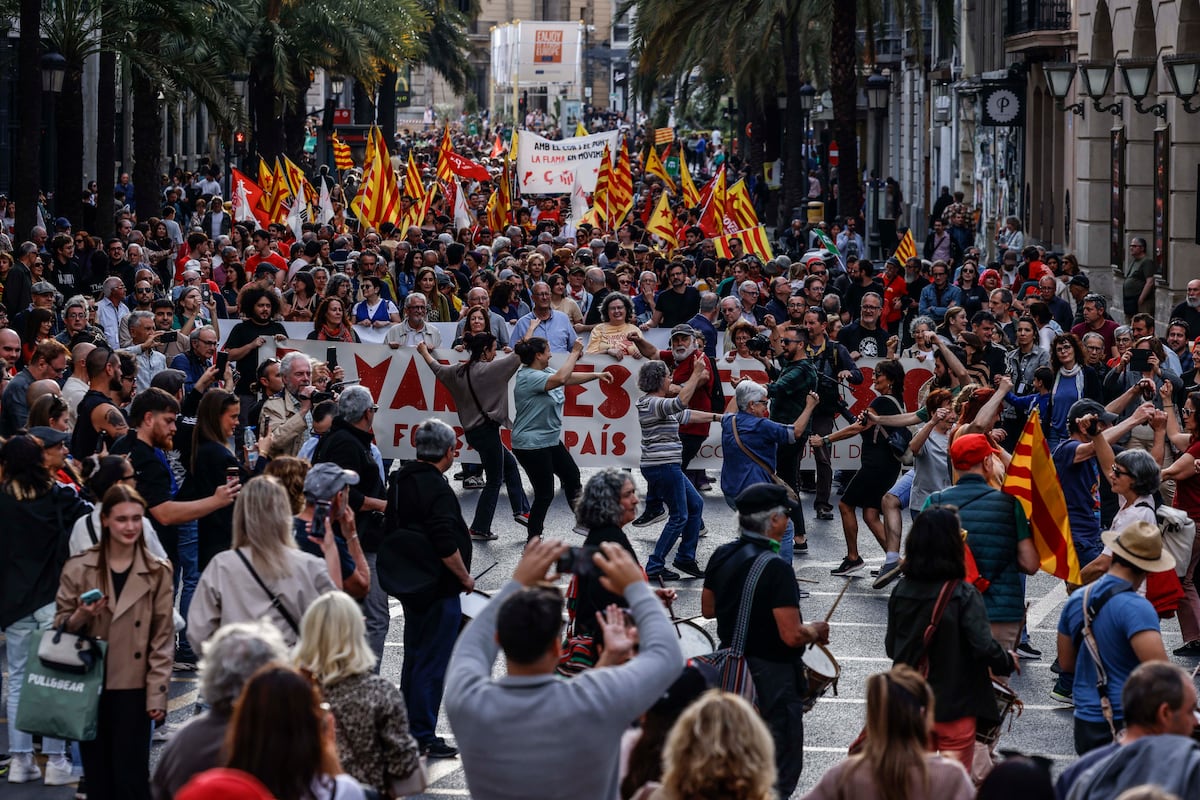
The march, called by Acció Cultural del País Valencian, left the Plaza de San Agustín after 6:20 p.m. without incident, although it was about 20 minutes late. The attendees displayed placards and banners with the slogans “Valencian Country, language, culture and future”, “Who loves the language uses it”, “The language is not touched”, “Revert the linguistic substitution” or “The memory is not touched”, and they chanted proclamations such as “Valencia will be the tomb of fascism” or “Valencian anti-fascist country”.
This year’s demonstration, under the motto Faced with aggression, we are the strength of the country,-In the face of aggression, we are the strength of the country- and led by a group of tabal i dolçaina, it has had the participation of different leaders and political officials such as Àgueda Micó (Compromís) and other left-wing parties and has insisted that society wants a government that “does not persecute” those who speak Valencian.
In the words of Anna Oliver, “we want a democratic and free country; we want the Valencian executive to stop being sectarian and we want it to govern for everyone,” she said, to highlight: “We want a government that does not persecute those of us who speak Valencian.” In addition, he also wanted a country “for the future in which young people can have a job and do not have to dedicate themselves exclusively to the world of tourism.”
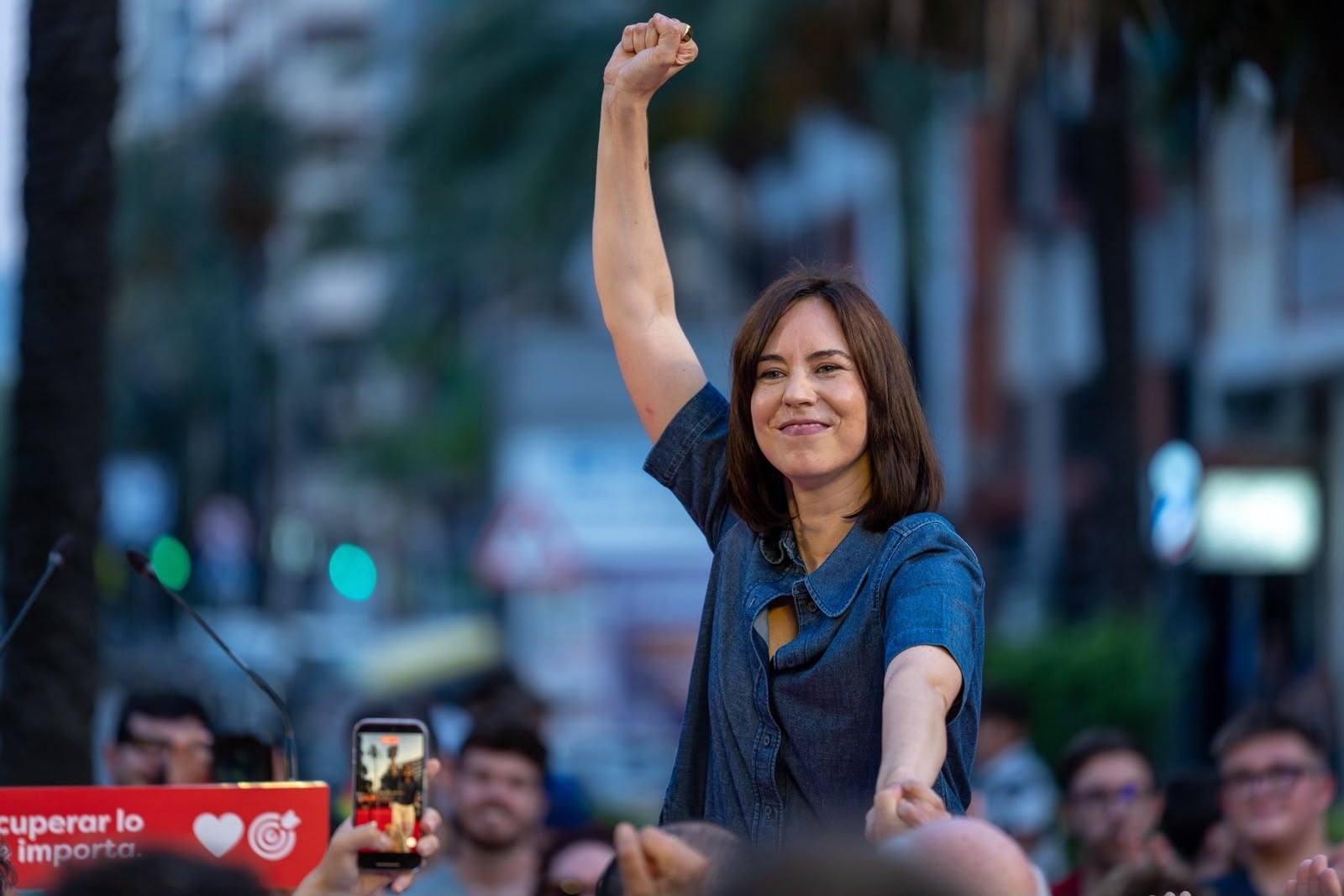
Meanwhile, in statements to the media, the representative in Congress, Àgueda Micó, stressed that “today we have come to defend our rights.” At a time, he continued, “in which the extreme right wants to put an end to everything that is different, also with our own culture and language, our own, I think that more than ever we must claim that we are very alive.”
Along these lines, he celebrated that “our language, our culture and our way of seeing it is untouchable.” “We will not allow anyone to harm what we Valencians are,” he added.
At the end of the march, the manifesto was read, which denounces, among other things, “the misnamed ‘educational freedom law’, which offers false freedom in exchange for cornering Valencian in school, together with the recent censorship of Catalan and Balearic authors in classrooms, is one of the most disastrous examples of the Consell’s anti-Valencian ideological drift.”
Likewise, “the mistreatment that the names of our towns and cities suffer is shameful. Without going any further, in the city of Valencia itself, contradicting the linguistic criteria of the Valencian Language Academy (AVL), they want to accept blavera accentuation and the bilingual form.”
The management of the flood of October 29, 2024, which resulted in 230 fatalities and extensive damage, has also been criticized: “We do not forget the negligent and murderous management of the dana. Because we will never be able to forget it, because our hearts sink when we think of the number of lives that could have been saved, of the immense suffering that could have been avoided.”