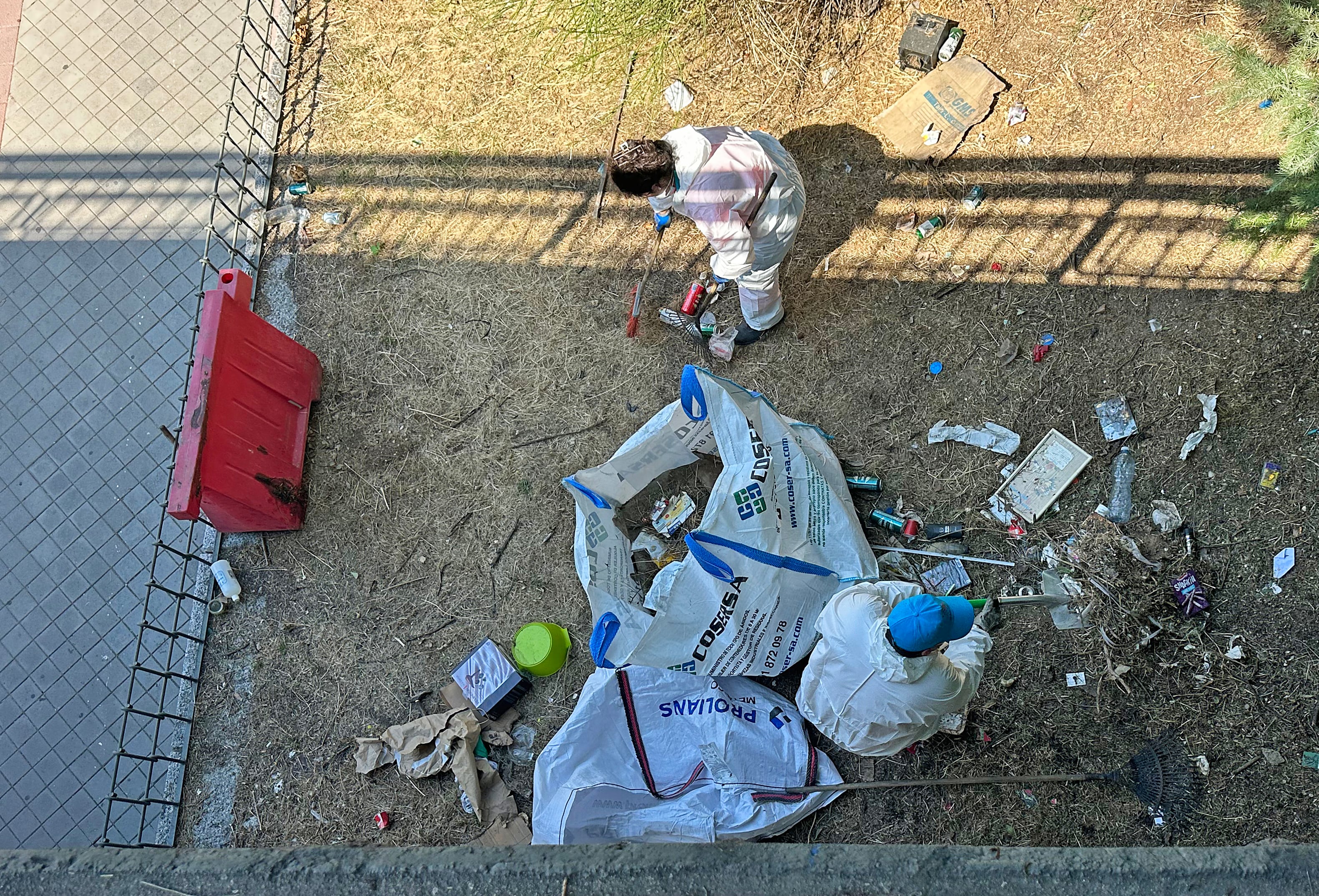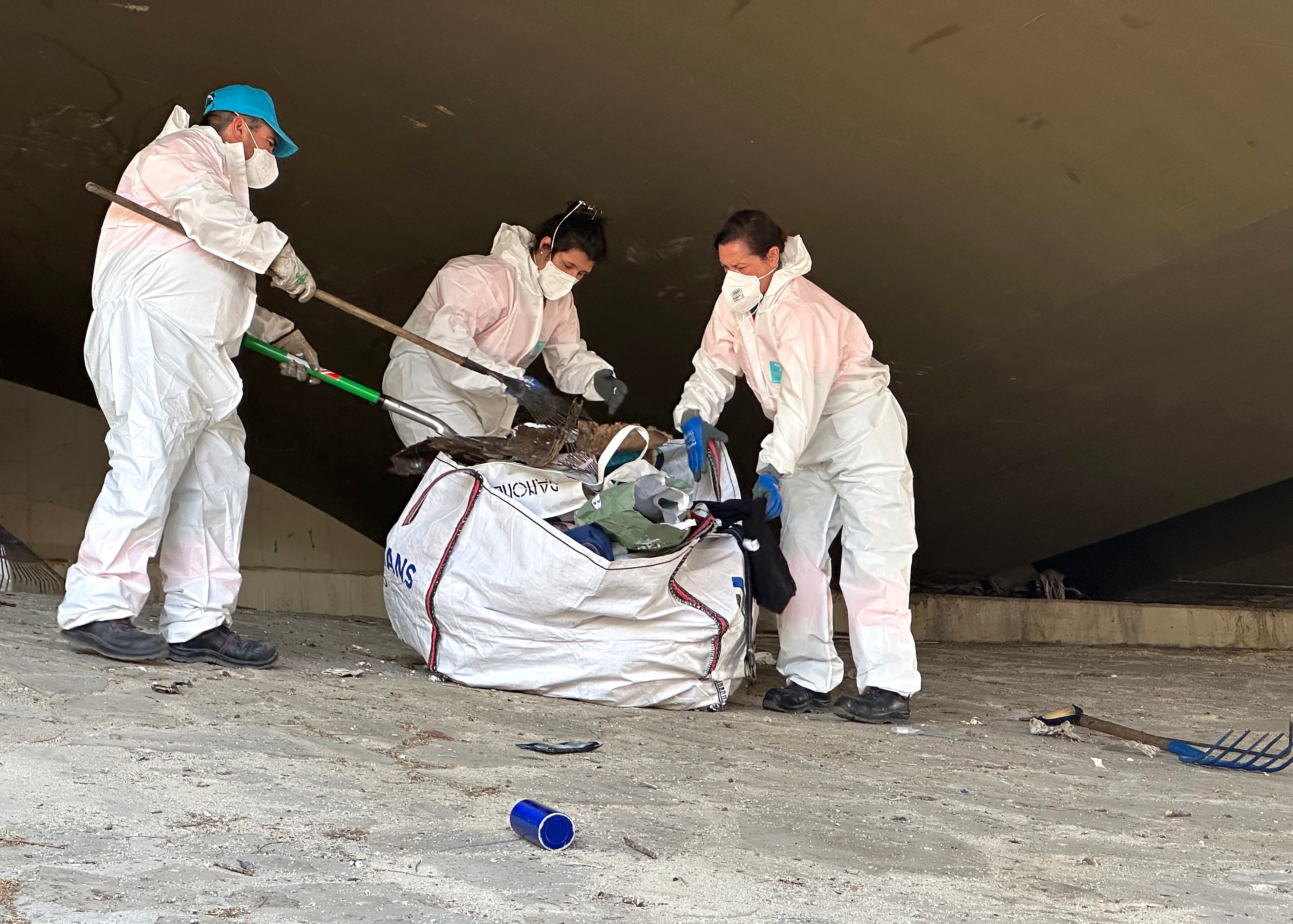
It’s 10:47. Carabanchel, southern district of Madrid. A team of five workers from the Urgent Cleaning Service (SELUR) has just parked their truck on the shoulder under a bridge on the Santa María de la Cabeza promenade. Under it lives a person who has no roof other than that offered by that viaduct, but who is not present in the place at that moment. The four workers who carry out the task are dressed in personal protective equipment that brings to mind the worst moments of the pandemic. They also wield a rake with which they sweep every object they can reach. Two municipal police officers and two Samur Social workers contemplate the scene in silence. Without prior notice, the cleaning workers begin to remove the most voluminous items, taking advantage of the owner’s absence: mattresses, improvised sofas, and wooden planks that the owner used to have some privacy at bedtime. Then it’s time for everything else. Vases are broken, wet blankets are dragged across the floor and children’s backpacks, clothes and toys are thrown. In just one hour, there is no trace left that anyone had slept there. “We don’t know who lived here or where they are,” confirms one of the employees, who prefers not to reveal his name for fear of reprisals. This same procedure was carried out on Tuesday in 11 other different points in the capital.
Continue reading