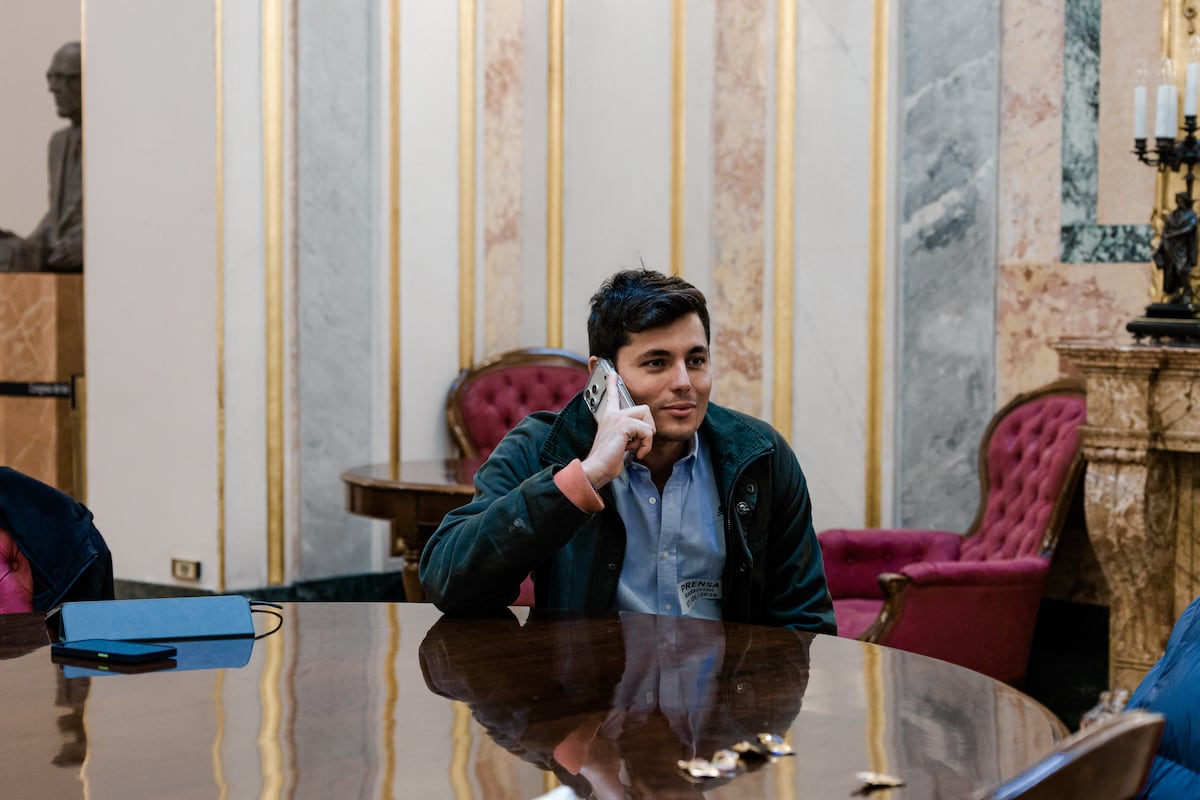



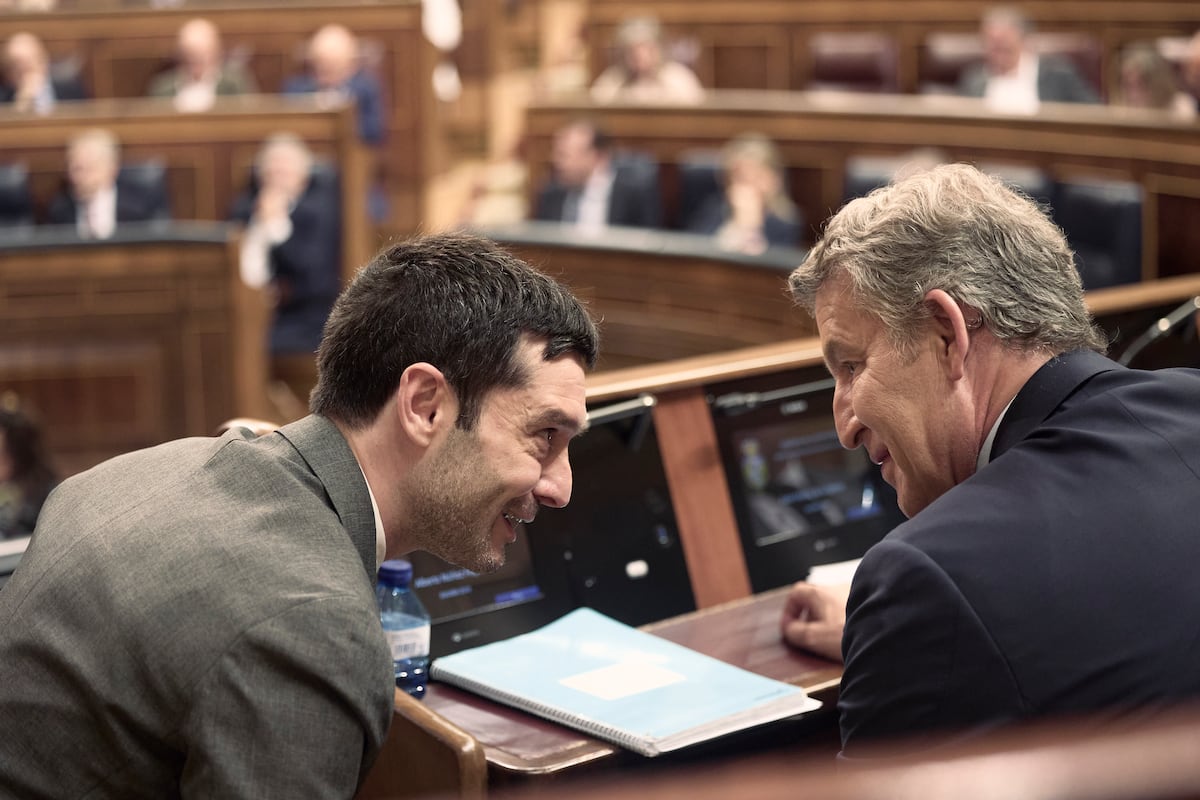
“We will hurry until the last second,” insists, without throwing in the towel, the Minister of Consumer Affairs and Social Services, Pablo Bustinduy. Just two days before Congress votes, next Tuesday, on the validation of the decree that extends the freezing of rental prices for two years, the forecasts could not be more unfavorable for Sumar, its main promoter. Junts, which has the key to approval, insists on its rejection and its refusal to officially negotiate with the Government. The socialist part of the Executive – which already accepted him reluctantly, after a proposal from Sumar’s ministers – considers him dead and, in fact, despite official statements, has practically given up seeking support. But Bustinduy, charged by his training with commanding the initiative, maintained from the beginning that assuming the failure of the decree was part “of a political operation with clearly dissuasive intentions.” And there it continues, “until the last second.”
The minister presents his arguments again and again: “There are more than two and a half million people affected. It is estimated that the decree would save each family about 2,000 euros a year. And in cities like Madrid, Valencia or Seville it could reach up to 600 or 700 euros a month.” His asset is the “social outcry,” he adds, the surveys that point to clear popular support for the measure and the mobilization of different entities, from the Tenants Union to various NGOs. From all over Spain comes news of thousands of burofaxes sent by tenants to their landlords to demand the extension of rents, taking advantage of the time the decree is in effect while Congress does not rule. “And it is already demonstrating its effectiveness,” says Bustinduy, because there are landlords who have agreed to negotiate affordable rent increases. As part of the social pressure, the Tenants’ Union has called this Sunday for a rally in front of the PP headquarters in Madrid and has sent 75,000 letters to the deputies.
Bustinduy also sent a letter to the leader of the PP, Alberto Núñez Feijóo, after he refused to even sit down to negotiate. The minister appealed to the fact that among those affected there are voters from all parties. But the parliamentary spokesperson for the PP, Ester Muñoz, confirmed this Saturday her emphatic refusal. In an interview with the program Parliament of RNE, described the decree as “sectarian” and maintained that these measures only contribute to retracting the offer. “On the contrary: what it does is shield it,” replies the minister. “Otherwise, those apartments could go to tourist or seasonal rentals.”
There have also been no formal negotiations with Junts. The pro-independence party proclaims that this route is closed with the Government. But Sumar has worked hard to maintain communication channels, with the Minister of Culture, the Catalan Ernest Urtasun, as the main interlocutor. And, in return, he has shown himself willing to propose within the Government some of the fiscal policy measures to support the self-employed. that Junts has been demanding for a long time.
At the same time, Sumar has had to send conciliatory messages to Waterloo to reduce the tension with Carles Puigdemont. The second vice president, Yolanda Díaz, reaffirmed herself this week on Onda Cero, before Carlos Alsina, in her accusation that Junts maintains “classist” and “racist” positions. Díaz had already said it on other occasions, in Congress itself or in an interview in this newspaper at the end of February. So there was no reaction from those mentioned. But this time Puigdemont has responded with fury, accusing her of “manipulating like Trump” and considering her relations broken with Díaz’s party, the first leader of the government coalition who came to see him in Brussels and took a photo with him after the 2023 elections.
At the same time, the spokesperson for Junts in Congress, Miriam Nogueras, further hardened the tone in the control session last Wednesday and, for the first time in the legislature, demanded that the president call early elections. The independentists move between secrecy about their contacts with Sumar and public statements in which they reiterate their refusal to extend a measure adopted after the crisis due to the war in Ukraine and that would now be justified by the conflict in Iran.
Everything seems against Sumar. And yet, Bustinduy insists that it is still possible: “If they knock it down, they will have a very difficult time explaining it to people,” he says.