
Mr. Enrique Fink takes the keys to the British cemetery in Valencia from his pocket. He wants to show one of the tombs in the compound. The unique necropolis, property of the British Royal Crown, houses the remains of his ancestor Henry Fink, murdered in 1868. Henry’s descendant has narrated that crime in a novel: The death of English (No Man’s Land, in Spanish; Reclam, in Valencian). But Fink is interested in another grave: that of the Bacharach family. The weather has worn away the stone with the identity of those buried: Karl, born in 1885; Franzisca (1891); and the couple’s children, Wolfgang (1922) and Stefanie (1927). The slab offers disturbing information: all of them died on the same day, June 21, 1936. What happened that day in a Valencia that was only 27 days after Franco’s coup d’état?
Perhaps the answer is hidden behind the questions that the teenager Carmen, one of the granddaughters of Hugo, Karl’s brother, threw point-blank at one of her uncles: “How many generations must pass to get rid of the Jewish burden in our blood? How many matings and crossed offspring do we need to be like the others? When will we stop being Jews?”
This is how Vicent Garcia Devís, one of the journalists invited by Enrique Fink to the Brutánico cemetery, tells it in his book Akiva. Running From the Wolves (Akiva. Fleeing from the wolves), which has just been published by the Valencian publishing house Austrohongaresa de Vapors. Devís has spent years investigating the secrets contained in this story.
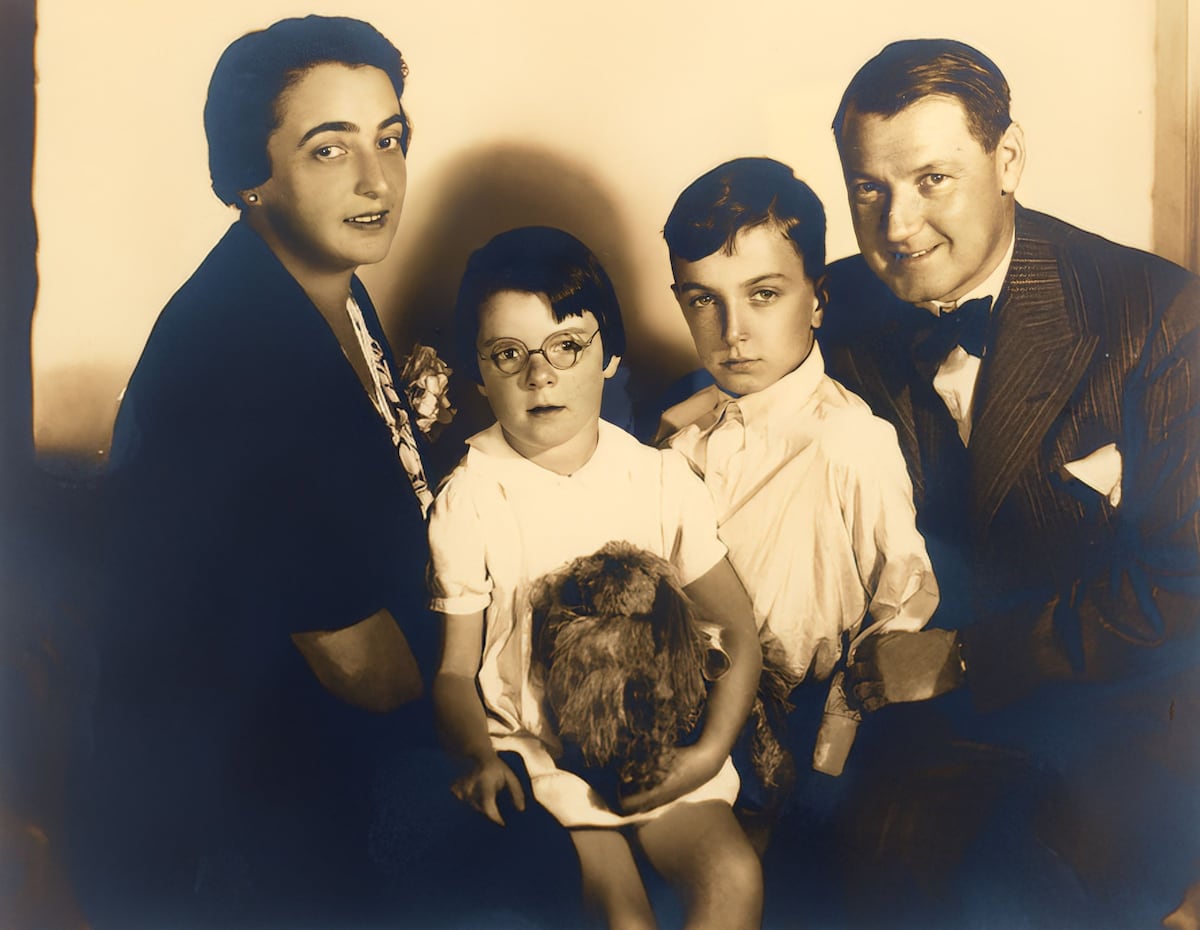
The Bacharach family, of Jewish descent, had been trying to integrate into German Christian society for several generations. At birth, parents registered their children with a Christian name. But they did not forget to secretly add another one of Jewish tradition. Karl Bacharach was also Akiva Bacharach. In 1921, the doctor Karl/Akiva married Franzisca Kleinhaus, also a medical graduate and belonging to a much more orthodox Jewish family. They had a son and a daughter, and their life went peacefully until the arrival of Nazism to power.
“Until the 1930s, they were a wealthy and respected family. They lived in Munich, where they attended cocktail parties, concerts, poetry recitals, picnics…, and on holidays they stayed on farms in the Bavarian countryside, at the foot of the Alps,” explains the author.
All this changed with Hitler’s racist laws. After being deprived of the practice of medicine, of being expelled from cocktail parties and recitals, on the night of November 26, 1935, the four members of the family began a dangerous journey to Valencia, where Hugo, brother of Akiva, and grandfather of Sol Baharach, who was a businesswoman and professor at the University of Valencia and wife of Manuel Broseta, murdered by ETA in 1992, was waiting for them. Hugo had become a prosperous businessman. exporter. Only six months later, the four fugitives died in their new house on Martí Street in Valencia.
The press attributed the death to gas inhalation. But some media saw the long hand of the Gestapo in the events. The Swiss newspaper Freiburg News titled: “Driven to death by the Gestapo.” And he specified: “The German doctor Mr. Bacharach, his wife and their two children have been poisoned by gas. The Bacharach family had to leave Munich because Mrs. Bacharach was Jewish. The family went into exile in Valencia, but there they were not safe from the German secret police either.”
Karl Boettcher, attorney for the Bacharach family, nipped in the bud any attempt at political speculation and came to the defense of the Nazi regime: “As attorney for Dr. Karl Bacharach and with general delegation of full authority from him, I managed his financial affairs in Germany after his emigration. Based on my knowledge of the latter, I hereby testify – under oath – that the Bacharach family left Germany peacefully and voluntarily.”
In reality, the Bacharachs had to pay an abusive tax to be able to emigrate, and they liquidated their possessions at a loss. Other members of the lineage, less fortunate, died shortly after in concentration camps.
The judicial and police files of the Martí Street tragedy in Valencia have not been preserved. The family of the deceased, with Hugo at the head, wanted to raise the minimum amount of fuss. The Bacharachs, Jews who arrived in Valencia from a Germany in Nazi hands, were surprised a few weeks later by the Franco coup and the start of the Civil War. The victory of the rebellious side, strongly anti-Semitic, discouraged any notoriety, the author points out.
In fact, once the Civil War was over, Hugo Bcharach and his family began a clear position in favor of the victors. A true schizophrenia: Jews persecuted in Germany and now allies of the most anti-Semitic Franco regime. To do this, they had to hide their religious origin, the author points out.
Perhaps here is also the key to the death of Akiva, his wife and his children, maintains the editor of the work, also journalist Francesc Bayarri, author of the book Date in Sarajevo (Montesinos), an investigation into the murder of the Croatian general Luburic in Carcaixent in 1969. “Going from well-being and social recognition to the status of exiles. From a society with a certain tolerance to converted Jews – until the arrival of Nazism – to a Spain with anti-Semitic war drums. Without knowing the language of the destination country. Without beautiful poetry recitals. Without visits to the first ski slopes in the Alps,” he adds.
Martí Domínguez sums it up this way in the prologue: “The story of the Bacharach family is, in large part, the story of that collapse of Europe that led to the Second World War.” The writer Alfons Cervera also concludes in the epilogue: “Exile has no beginning or end. You are a drop of absence for life. Of cruel longing. The memories of a homeland that will never be yours again. Forgetfulness is a cry in the streets of the new land, a land in which nothing will be like in the promised land.”
The four Bacharach rest in the British cemetery, not the Catholic one. Enrique Fink emphasizes that it is the most plurinational space in Valencia. There rest English Anglicans, German Protestants, Norwegian brigade members, and Jews persecuted by Nazism… Up to 17 nationalities, with their religions or their atheism. Or with a Christian name and a Jewish name. Like Karl/Akiva Bacharach.