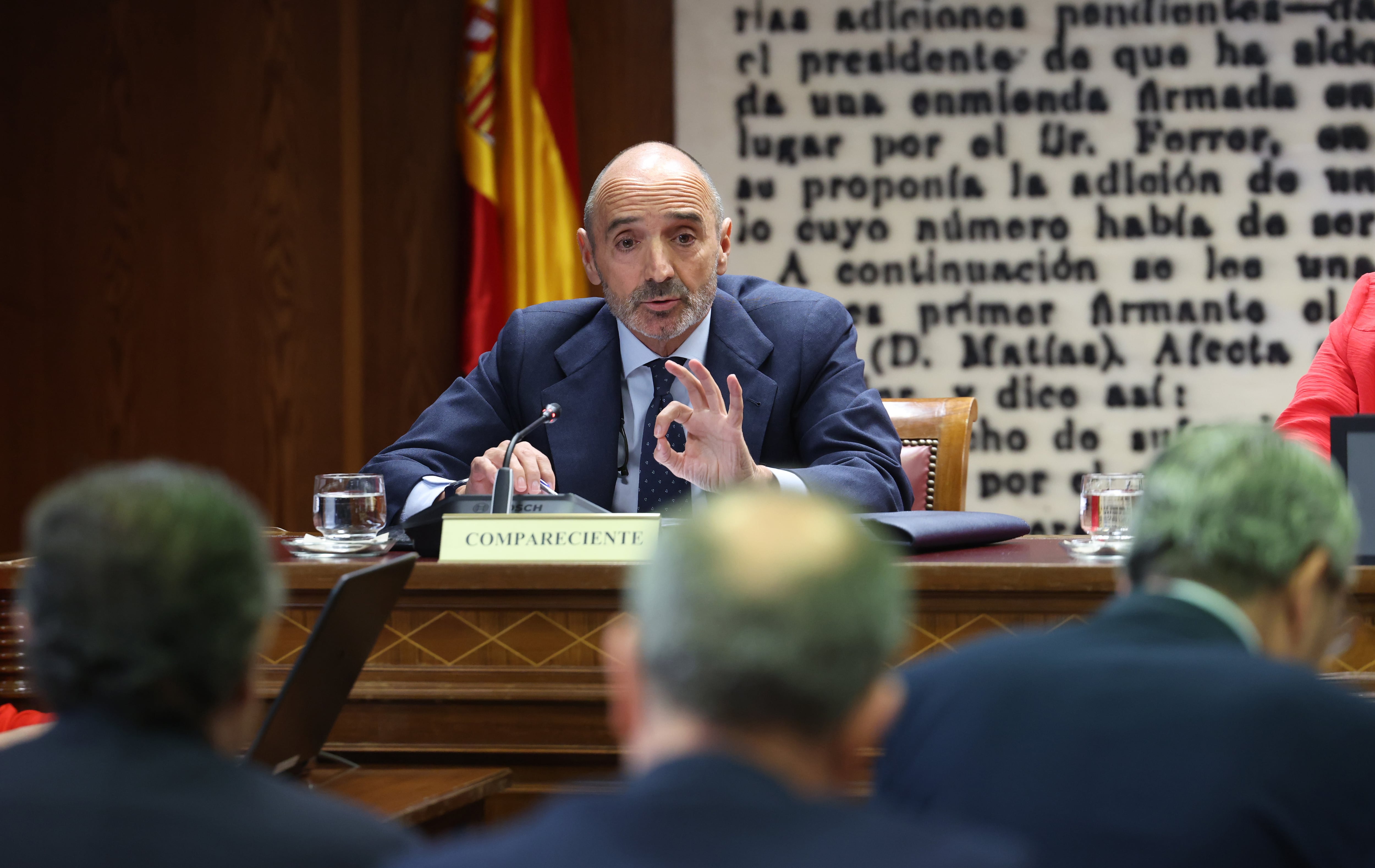

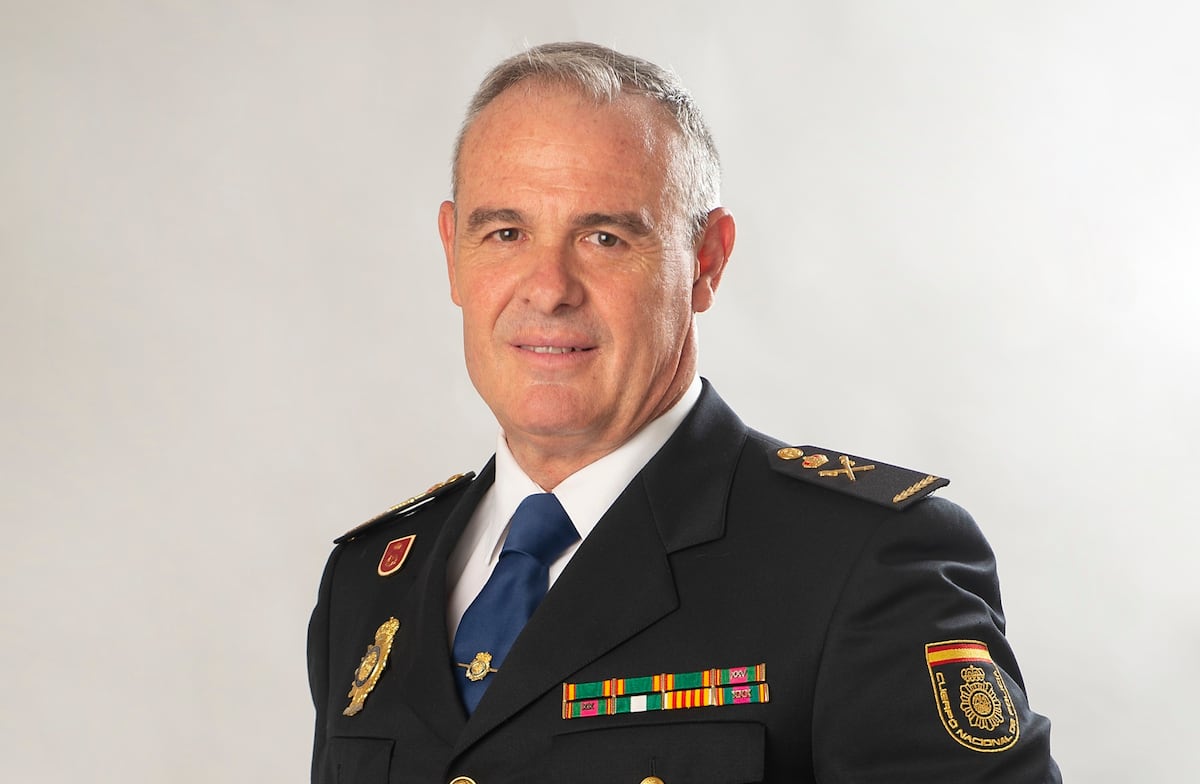
In September 2022, the person appointed this Friday as deputy operational director (DAO) of the National Police, Commissioner José Luis Santafé Arnero (Madrid, 60 years old), assumed the position he has held until now, that of senior chief in the Balearic Islands. And he did so with a speech in which, before the general director Francisco Pardo, the then Government delegate in this community and today Secretary of State for Security, Aina Calvo, and the DAO at that time, also commissioner José Ángel González, remembered his humble origins: “Thank you for trusting once again in that boy from the (Madrid) neighborhood of Malasaña who in the 80s wanted with all his might to be a police officer in an environment that pushed him to end up being the opposite.”
Now, three and a half years later, it is the Minister of the Interior, Fernando Grande-Marlaska, who puts his trust in this “boy from Malasaña”, although this time for a mission that goes beyond what is strictly police. From his position as top chief of the National Police, Santafé must restore the image of an institution with more than 74,000 agents, greatly affected since the complaint for alleged sexual assault against his predecessor in the position became known in mid-February and the audios of a high command stationed in the Spanish embassy in New Delhi, allegedly harassing a subordinate, came to light shortly after.
The appointment of Commissioner Santafé as DAO has taken a good part of his colleagues by surprise, but more because his name did not appear in any of the pools to occupy the position – in the Interior and in public opinion the idea had been established that this position was going to be occupied for the first time by a woman as a symbolic gesture in the face of the alleged sexual assault that has triggered the crisis – than because he is not considered qualified to occupy the position. “They have chosen a good police officer as DAO, one with a low profile and with good personal relationships,” a retired senior officer told EL PAÍS, who also admitted that the chosen one was not expected to be Santafé.
The “low profile” comes from having spent a good part of his professional career outside of Madrid, mainly in the Balearic Islands, away from the networks of power and influence that are formed around the governing board, the body made up of 15 senior officers of the National Police that advises the general director and in which there is no shortage of internal quarrels and rivalries. Now he will be part of this body. “Santafé has spent almost his entire career in the Balearic Islands and, in addition, in operational positions, most of the time in Citizen Security units (in charge of ensuring public order and preventing crime). He knows what the street and crime are first-hand,” highlights an agent who was under his command and who this Friday applauded the appointment of the commissioner as operational director.
From his time on the islands comes his relationship with who has become his main supporter within the Interior, the Secretary of State for Security, Aina Calvo. She was the Government delegate in this community when he was appointed superior chief and at that event in which he introduced himself as a “boy from Malasaña”, Calvo did not hesitate to address him as “our dear commissioner.” A good relationship that was publicly reflected again last December when she assumed the Secretary of State and Santafé moved to Madrid to be present at her inauguration. In his speech, Calvo did not spare praise for him and other leaders of the security forces in that territory. Several police sources attribute, in fact, to the number two of the Interior, a good part of the responsibility for the fact that the name of Santafé was on Grande-Marlaska’s table and that he has chosen him to close the crisis.
His subordinates describe this commissioner as “close”, who more than once had coffee with them as one of them, but also firm to make himself respected. “If he has to read your card, he reads it to you,” emphasizes one, who remembers that “his rings didn’t fall off” even though he was the boss and he got behind the wheel of a police vehicle to transport detainees if necessary. “Above all, he is a very good team manager,” highlights another commander, who adds that, when there was an uptick in crime statistics in the Balearic Islands for any crime, he quickly adopted measures to stop it. “Sometimes he was stubborn about that,” he adds like but. “He still has authority, experience and operational knowledge. Possibly, one of the best for the DAO position,” another police commander applauded the Interior decision.
In the hours after it became known that he was going to take up the position of operational director at such a critical time for the police, it was practically impossible to find anyone within the police who would question his appointment. In fact, a senior officer questioned recalled that, in December 2019, when he was number two in the Balearic Islands leadership, “he knew how to deal very well” with the scandal of the 16 warded girls who were prostitutes in this community. That case was finally archived by the Prosecutor’s Office after it was found that there was no organized plot. “His performance then was a demonstration of good work,” he emphasizes.
In the 2022 speech of his inauguration as Chief of Police in the Balearic Islands, the same one in which he defined himself as a “boy from Malasaña”, Santafé stated that he would be “brave when making decisions.” The results at the head of this community since then seem to support him, with decreases in the last year in the most serious crimes, such as sexual assaults, kidnappings or completed murders, according to the recent Interior crime statistics. Next week, when he takes office as deputy operational director, he will have the opportunity to set the guidelines to achieve the main mission that has been entrusted to him: to get the National Police out of the current slump it is going through.