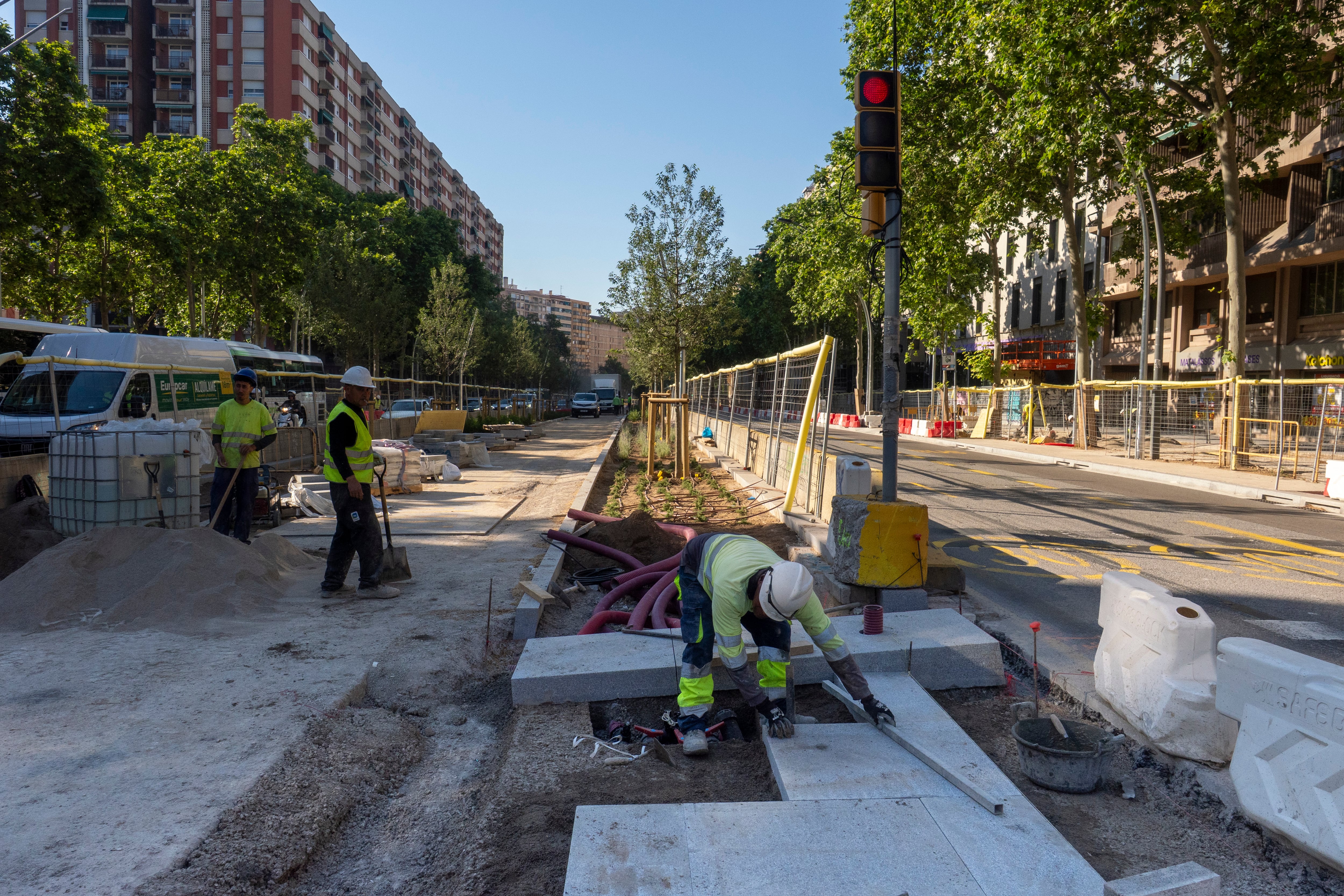

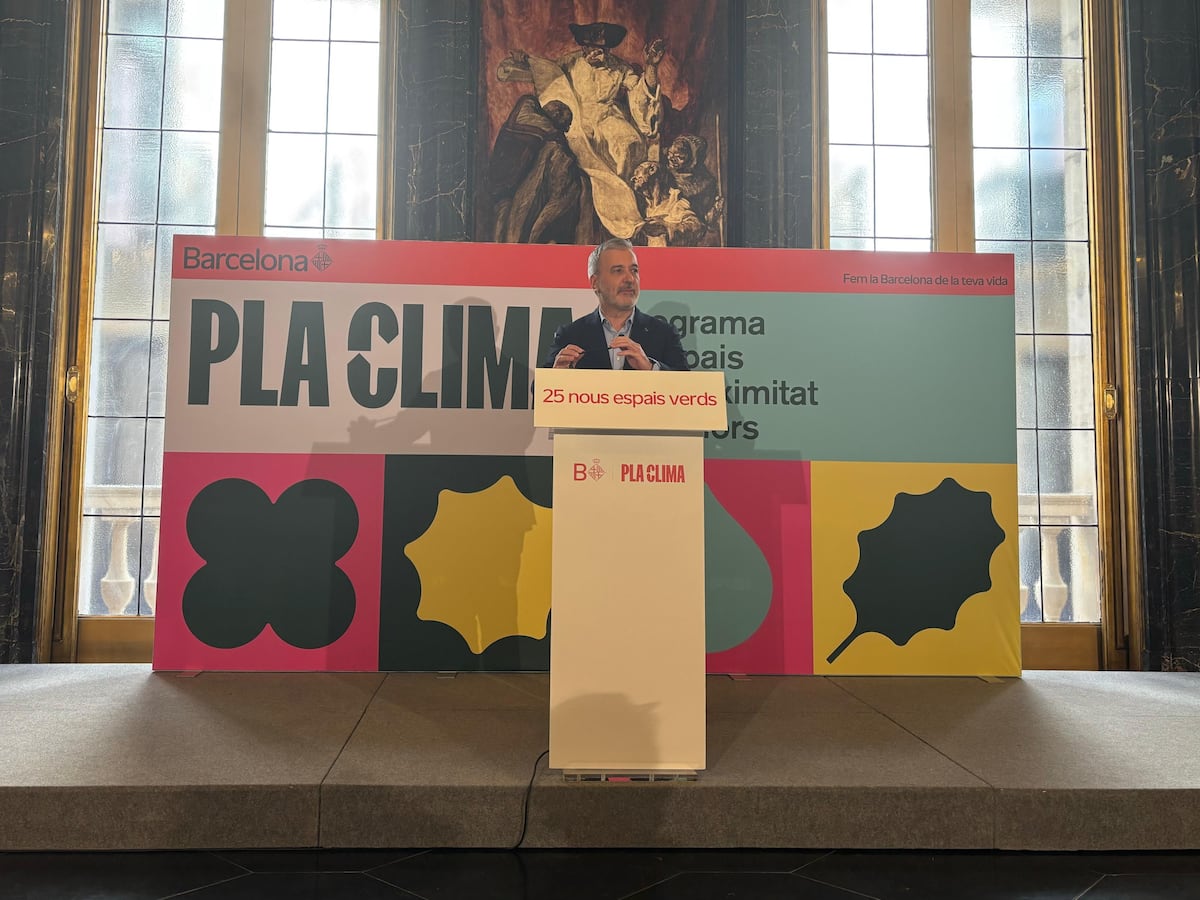
The mayor of Barcelona, Jaume Collboni, presented this Friday the projects to convert unused spaces throughout the city into 25 new green areas by 2027. In total they will add ten hectares, the equivalent of 15 football fields, in which Barcelona City Council will invest 46 million euros. These 25 projects are the first batch of the 40 planned by the Proximity and Interior Spaces Program (PEPI) of the Climate Plan, which aims to generate 20 new hectares of green and proximity spaces this mandate, an area larger than that of the Ciutadella or Glòries parks, spread across the ten districts of the city.
“What we have done is rake to find disused, forgotten spaces, that were ‘not spaces’, and recover them to extend greenery to all neighborhoods. It is a new way of acting,” highlighted the mayor. Jaume Collboni has emphasized that, in addition to “democratizing greenery,” these projects give “identity to places that are not places,” which in many cases have not been used for more than ten years. The projects were never put out to tender despite having the urban planning classification of green and where “dead hard squares made no sense.”
Asked about his electoral promise to transform blocks of the Eixample into indoor parks to increase urban greenery, the mayor assured that the project “is making progress” and that in “one or two months” the municipal government will present “the state of the matter.” Collboni, who announced that the transformation of block interiors from the 2023 electoral campaign would be resumed as a contrast to Mayor Ada Colau’s superblocks.
Among the 25 projects of the first batch, the mayor has highlighted the new Oriol Martorell gardens, in Sarrià-Sant Gervasi, which will end up having an area of more than 22,000 square meters on the slab of the Generalitat de Catalunya Railways and which will extend beyond 2027; the plot on Castella street, in the Sant Martí district, with an area of nearly 3,000 m2; a new green space of 6,600 m2 on Pintor Alsamora street, in Nou Barris, and the space on Pintor Tapiró street, in Les Corts.
These projects will begin to transform over the coming months and will be added to four actions already carried out, such as Illa Colorantes, in Sant Andreu; the urbanization of part of the old industrial site of Can Ricart and the creation of a green area above the pneumatic collection center that connects the streets of Pallars and Zamora, in Sant Martí; and the expansion of the Emma gardens in Barcelona, in Eixample.