
For many recruiters in Germany, finding suitable candidates is becoming more and more of a challenge. According to a recent LinkedIn survey of 750 HR managers in Germany, 53 percent cited the lack of qualified applicants as their biggest problem. At the same time, however, there is a structural deficit in the selection process: 73 percent only discover relevant skills after a deeper screening and almost one in two can hardly distinguish between candidates purely based on CVs.
Where classic recruiting processes reach their limits
Resumes, job titles and career paths have long been considered reliable indicators of qualifications. However, they are reaching their limits in an increasingly complex labor market. Skills often develop outside of linear career paths, while formal positions only reflect part of the actual skills profile.
Suitable candidates therefore often remain undiscovered – with direct consequences for the company’s success: 38 percent of recruiters see the quality of hiring at risk, 37 percent expect losses in productivity in teams and 34 percent expect delays in growth and expansion plans.
“For many companies, recruiting is increasingly becoming a bottleneck: The pressure is increasing, but at the same time the necessary information is often missing to quickly identify qualified talent. This leads to outdated and unproductive processes and can have a direct impact on business growth and competitiveness,” says Barbara Wittmann, Country Manager LinkedIn DACH.
Artificial intelligence as the key to undiscovered potential
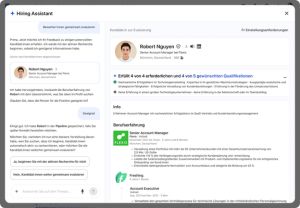
Against this background, the use of artificial intelligence in recruiting is becoming increasingly important. 81 percent of the recruiters surveyed in Germany see this as an opportunity to make previously hidden talents visible.
One approach is LinkedIn Hiring Assistant. The AI agent supports recruiters in evaluating candidates not only based on formal information, but also based on their actual skills and experience. The Hiring Assistant analyzes connections between skills, professional stages and requirements.
“Hiring Assistant makes candidates visible who are often overlooked in classic search processes. Recruiters can find qualified specialists more quickly and discover talent that they would not have otherwise come across,” says the country manager.
The end of classic selection processes?
Classic selection criteria such as CVs and professional positions remain important points of reference. But in a labor market where skills develop faster than formal qualifications, they only provide a partial picture. Anyone who is only looking for the supposedly perfect CV will overlook people with relevant potential that is not formally reflected: career changers, people with non-linear careers, specialists from other industries with transferable skills. For HR managers, the question is no longer whether AI is used in recruiting, but rather how it can be sensibly integrated to make better and faster hiring decisions.
Companies that use Hiring Assistant report measurable effects: 81 percent fewer profiles have to be screened manually, recruiters save an average of 1.5 hours per position identifying qualified candidates, and response rates to personalized InMails increase by up to two thirds.
This also changes the role of HR. As administrative tasks become more automated, the strategic dimension of personnel selection becomes more important. The focus shifts from the search to the well-founded evaluation and decision. This is also confirmed in practice: “Thanks to the reduced research effort, our team can concentrate more on consulting, stakeholder management and collaboration with managers – this is exactly where the greatest added value comes from,” says Libero Bott, strategic personnel marketing & recruiting specialist at SRH Holding.
LinkedIn Hiring Assistant is now also available in German.