


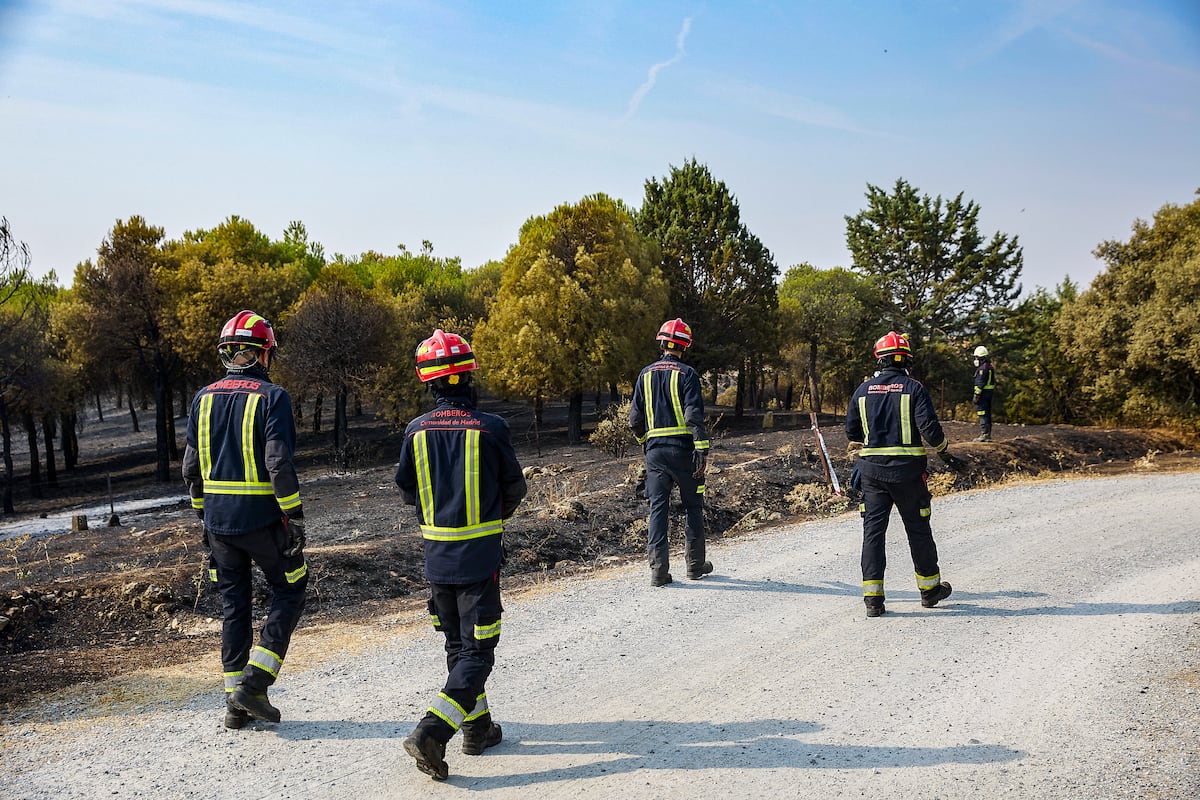
On July 12, 2012, a woman decided to clean her farm in El Vellón, in the mountains of Madrid, of stubble and weeds. The woman, who at that time was 69 years old, began to cut the grass and collect the remains at a time of maximum heat, two-thirty in the afternoon. Then, he threw everything into a drum and set it on fire. A few hours later, the flames had consumed 430 hectares of forest (four times the Retiro Park), affected various protected habitats and had a high impact on the Torrelaguna aquifer, the municipal area adjacent to El Vellón. 14 years later, the woman has been sentenced to a year and a half in prison and to pay almost 1.4 million euros, after the case was lost in court for several years.
On the day of the events, there were tremendous gusts of wind of up to 30 kilometers per hour and the thermometer read 34 degrees. With these weather conditions, the regulations establish that the use of fire on forest land requires authorization from the General Directorate of Citizen Protection, something that, in this case, did not happen. The gusts of wind caused the flames to spread with great speed and even affected the land where two inhabited homes were located. Luckily, the fire stopped at the fence of the plot, although it remained a few meters from the houses. Although in the journalistic reports at the time it was a man who was responsible for the burning of stubble, in the end the woman was convicted. The defense lawyer takes advantage of professional secrecy to not explain this point.
The fire caused the deployment of ground brigades, bulldozers, heliborne brigades, seaplanes, bomber and coordination helicopters. This entire operation took 21 hours to completely extinguish the flames, in addition to the control work that continued for the following days. The ruling estimates the costs of all this deployment at almost 123,000 euros.
The worst thing is the environmental damage caused by the fire. The judicial resolution indicates that it was “significant” and that it affected “various ecosystems and habitats.” The ruling makes a list of all the species that burned during those 21 hours of fire: holm oaks, junipers, poplars, poplars, elms, cornicabras… The technicians calculated that at least 25 years would have to pass for the environment to return to what it was before. The economic loss was estimated at 860,000 euros.
It also had a tremendous impact on an aquifer in Torrelaguna where there are boreholes from the Canal de Isabel II that are used for urban supply. The investigation estimated that 115,200 cubic meters had been affected by the fire. The flames reached another aquifer, this time of less use in which there were only isolated wells from which small flows were obtained. The Tajo Hydrographic Confederation estimated the losses at 35,000 euros.
The investigation into this fire that occurred in 2012 lasted until 2017. In July of that year, a vacuum began that lasted until August 2022, in which the cause was left in limbo. On August 8 of that year, a justice official revived the process and recorded that “by carrying out work to organize procedures, the present case has been found.” This circumstance has caused the accused to be able to avail herself of the mitigating circumstance of undue delays, which are those unjustified delays that can only be attributed to the functioning of justice. These delays represent a reduction in the sentence.
Thus, 14 years later and now 83 years old, the woman was sentenced to a year and a half in prison, although she will not have to go to jail, and a fine of 360 euros. As civil liability, the payment of 859,500 euros to the Community of Madrid is imposed, 35,000 to the Tajo Hydrographic Confederation; 122,000 to the General Directorate of Citizen Protection and 8,900 to different hunting reserves in which large and small game were lost. The sentence cannot be appealed because the accused accepted the facts and her lawyer agreed to an agreement with the Prosecutor’s Office.