

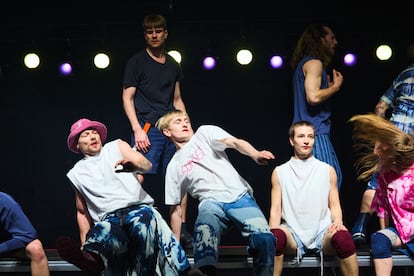
The Mercat de les Flors in Barcelona, which faces a long period of rehabilitation works on the building, will finally be able to have its headquarters until May next season, which was presented this morning. However, the municipal theater, whose director, María José Cifuentes, sees the forced closure for renovations as an opportunity to expand the center to other areas, will now begin its deployment in foreign spaces. In fact, the opening of the season itself, made up of forty shows and with a budget of 7 million euros, will be on September 18 at the Saló del Tinell, dependent on the Museu d’Història de Barcelona (MUHBA), with the new creation of Marcos Morau and his company La Veronal, Living & Leaving, first part of a “trilogy of life”.
The presentation of the season has sadly coincided with the news of the death of two dance professionals as relevant and appreciated as Álvaro de la Peña (1955), creator of the Iliacán company and linked to numerous initiatives in the sector in Catalonia, and Ramón Baeza (1963), founder of Increpación Danza.
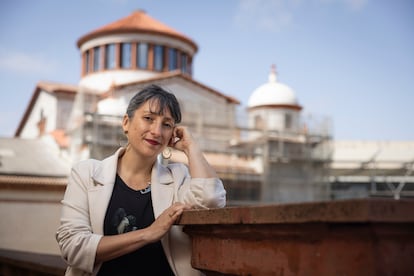
Cifuentes, who took over as director of the Mercat from Àngels Margarit in September 2025, has outlined the programming for the 26-27 season, the first entirely his, and what he has presented predicts a great and joyful bath of dance, from the big international names to the best and most interesting of the country’s creation.
Among the first, as Cifuentes herself has highlighted, the long-awaited return of the explosive and unruly French collective (La) Horde -Ballet Nacional de Marseille, after that true spring consecration that it had with Rosalía (After me, the flood, Mac room of the Mercat, October 9 to 11); the Sidney Dance Company directed by the Catalan choreographer Rafael Bonachela (Momenta, Mac, February 11-13); Carte Blanche- Norwegian National Contemporary Dance Company directed by the Athenian living in France Katerina Andreou (How romantica piece that evokes the dance marathons of the United States of the Depression-type Dance, dance damned, Mac, October 16 to 18, in joint programming with the Flaix de Tardor festival); the Cullberg company with the Brazilian choreographer Renan Martins (GuerrillaMac, December 11 to 13) or the German company Tanzmainz in collaboration with the choreographer Paloma Muñoz, so linked to the Mercat (In the poppy field, Mac, 5 to 7 February). Also, the caboverdiana Marlene Monteiro Freitas, the portuguese-angoleña Piny, or Jefta van Dinther.
Mohamed El Khatib and Israel Galván will offer within the framework of the joint programming of the Mercat and the Lliure Israel & Mohameda success at the 2025 Avignon festival and in which both artists dialogue with their parents through a screen (Lliure, March 17 to 21). Also at the Lliure, apart from a surprise that unites Morau and Cesc Gelabert and that will be explained on Friday in the presentation of the Lliure’s own programming, the company of the Senegalese Amala Dianor with Dub (June 11 and 12). While in the Mercat programming with the Teatre Nacional de Catalunya (TNC) you can see the choreography of the sensational Sharon Eyal Delay the sadmess (TNC, March 19-21).
As for the extensive local creation, there are names such as Inka Romaní (with The devil in the bodya show whose starting point is the Women’s Section of Falange and violence against women and bodies queer during the Franco regime), Candela Capitán (with Solas, which explores the overexposure of the female body in the digital age), Taiat Danza (Bernarda Alba’s daughters: Lorca’s work interpreted from the movement of those five daughters), Núria Guiu Sagarra, Vanesa Aibar, LaCerda, laSADCUM or Roger Bernat with a radical version without professional dancers of The consecration of spring.
To highlight two other shows from the Mercat programming exported to places as unusual as the Montjuïc municipal swimming pools (Dragon, rest on the seabed, by Pablo Lilinfeld and Federico Vladimir, which fuses synchronized swimming with dance and—pay attention to the concept—hydrofeminism) and Montjuïc Castle (Parades & disobedience, a massive “monumental dance” organized by the co-director of the national choreographic center of Grenoble, Aina Alegre).
The Councilor for Culture of Barcelona City Council Xavier Marcé highlighted in the presentation how a new stage opens with the new season and the different vision of Cifuentes. He took the opportunity to reflect on the complicated situation of the dance sector and its fight to have more shows of that genre scheduled in public and private theaters. He has expressed the institutional will for the “enormous” work of the companies to be exhibited and their presence outside the country to be normalized. Marcé considered that Barcelona’s commitment to dance “is evident” and recalled that the only municipal stage space is the Mercat, dedicated to this genre (“it was a right decision,” he reflected). For the councilor, the works at the center, which force him to leave his headquarters, offer the opportunity to turn it “into the Mercat de les Flors of Catalonia”, inspiring new interest in dance in the city and throughout the territory. “Conflicts offer possibilities,” he noted.
For his part, Xavier Fina, director of Cultural Promotion of the Generalitat, recalled that the Mercat is “the house of dance in Catalonia” and that they have asked the new director for the center to play that role “in all its dimensions.” He added that the will of the Generalitat (present in the Mercat consortium) is to help so that the closing stage is used to enhance the center’s expansion vocation.
Cifuentes has indicated that the season is placed under the heading Walls fall dancing, with the idea of breaking down physical, social, symbolic and mental walls, and confronting “the borders and the culture of fear.” The director conceptualizes the movement as a practice of resistance and a way of crossing imposed limits.
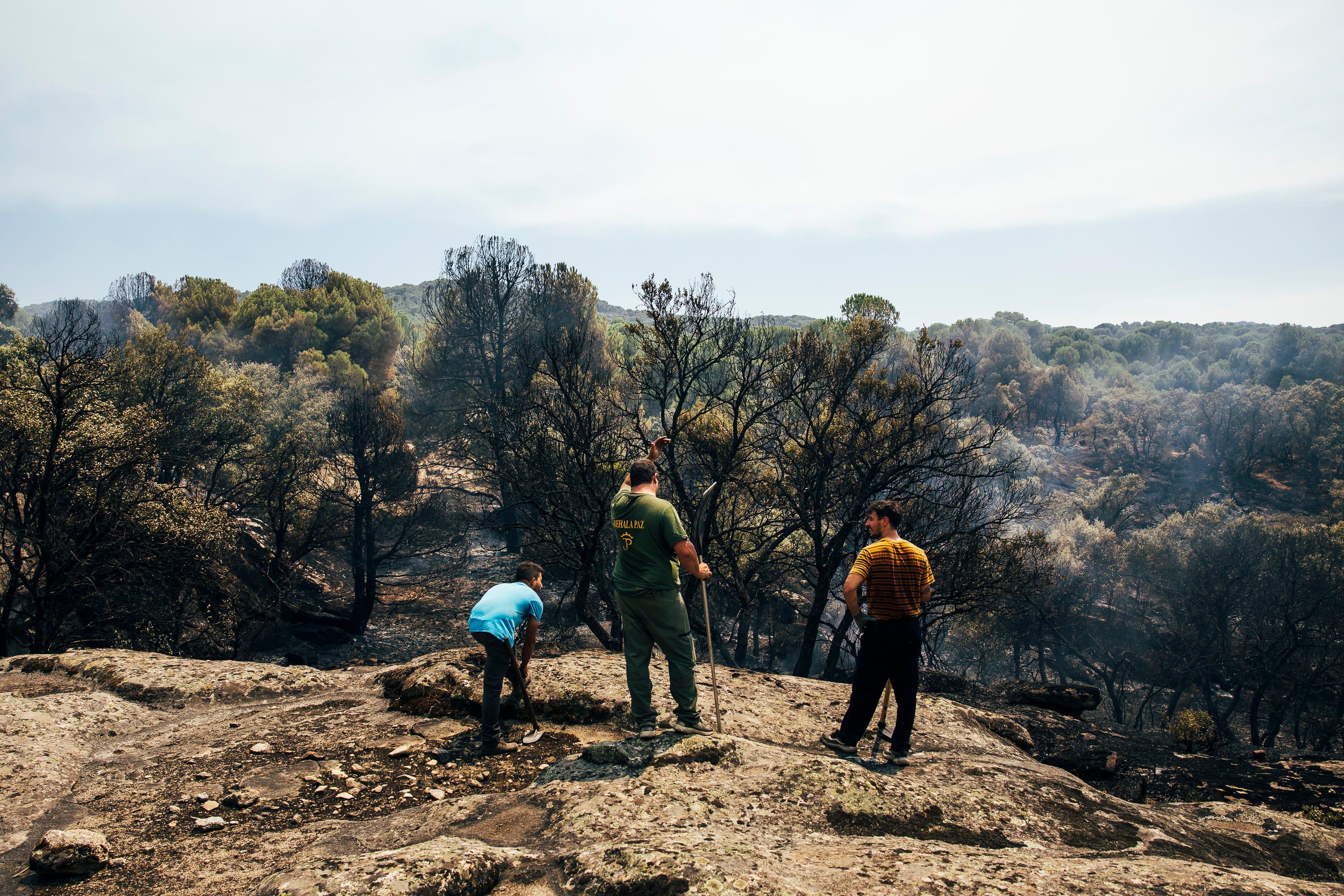
The Mercat will not close due to the works in February 2027 as initially planned, but due to a delay in the works, it has an extension until May in which it will be able to have its headquarters. “We will take advantage of our rooms until the last moment,” said Cifuentes. Starting in autumn 2027, the Mercat will be completely outside the building and for two years it will have to develop its project and programming in other spaces. The director does not rule out, apart from the agreed reception places, that the Mercat may have its own space by enabling one that is available and meets the conditions, a possibility that is being studied.