


Madrid has that ability to turn anything into a plan. A phrase, for example. Something you heard years ago, that you repeated half jokingly and that, without realizing it, stayed with you. Until one day it appears at the bar, served in a wide glass and with torreznos on the side. And then everything falls into place.
This week the city moves right there: between what you already recognize and what begins to sneak into your routine without asking permission. An afternoon that sounds like a series, a cafe where you were going to stop for five minutes and end up staying for an hour, and a place where—almost accidentally—you slow down. “Madrid doesn’t organize your day, it messes it up for you,” they say from one of the spaces.
You don’t have to choose. It’s more about letting yourself go: starting at a bar, continuing at a table where no one looks at your watch, and ending in a place where time directly changes shape. Everything happens nearby, everything fits. And, as almost always in Madrid, everything seems improvised even though it is not.
A torrezno and a glass that were already in memory
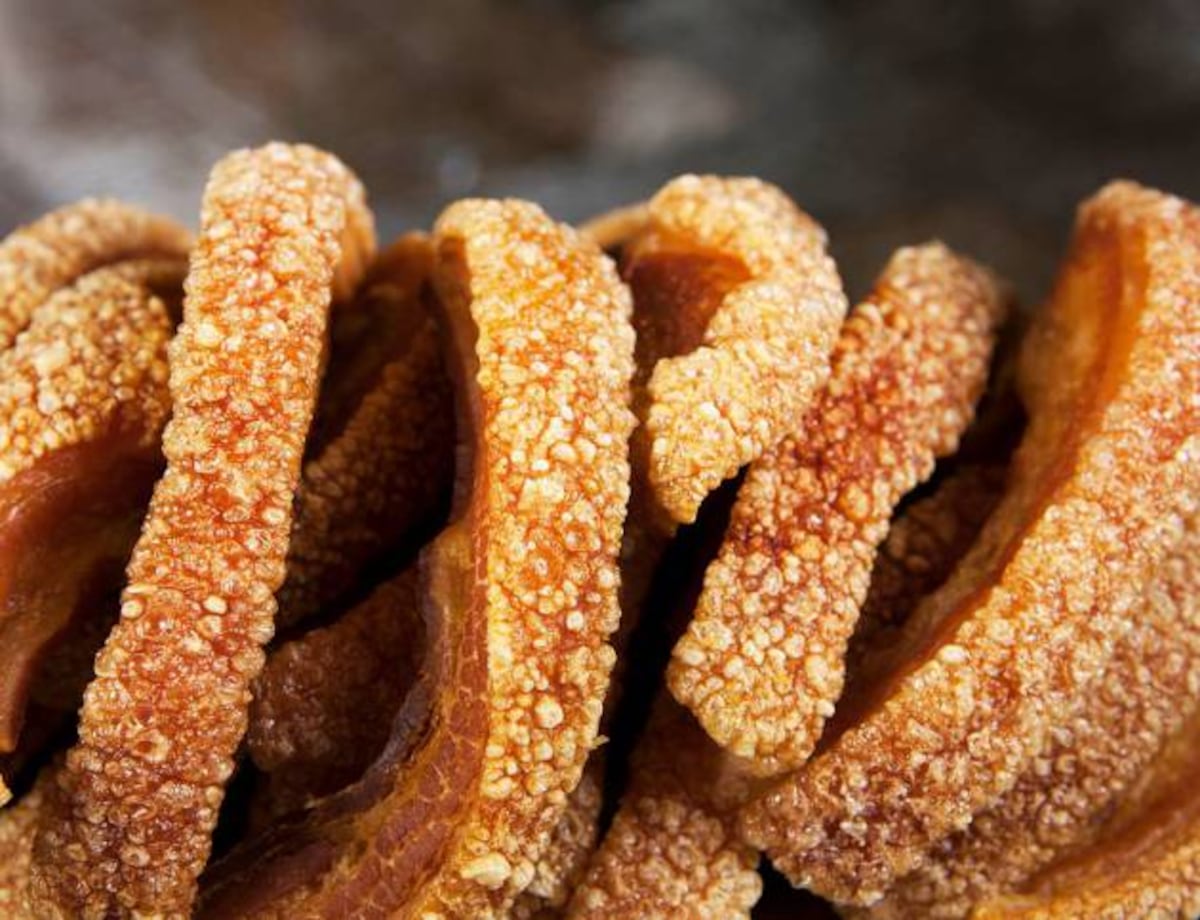
What started as a wink turned into a recurring phrase in Paquita Salas has ended up taking shape in the bar. During April, Larios promotes the Larios y torreznos route, a proposal that transfers one of the most recognizable codes of recent fiction to bars in Madrid—and other cities.
“There are combinations that are part of the collective memory and only need a context to return,” the brand explains. Here that context is the bar, the afternoon and a simple formula: a glass of Larios served in a wide glass, with tonic water and a slice of orange, accompanied by crispy torreznos. A pairing that mixes the citrus freshness of the gin with the intensity of the torrezno, generating a direct contrast, without artifices.
The initiative is deployed in a selection of emblematic bars – without a single fixed address – within an active route of 15 locations in several cities, including Madrid. “It is not about sophisticating the aperitif, but about reclaiming it,” they point out.
A cafe where the plan is to stay
NōFIN (Puente de Segovia, 3) was born from cycling, but has naturally opened up to something broader. The project arises from the union between the founder of NDLSS and the person in charge of the space with a clear idea: to create a real meeting point to reach after a route.
“We didn’t want it to be just a place to have a drink, but a space to stay,” they explain. Located near Madrid Río, the place has been attracting runners, neighbors and diverse profiles. “The response has been organic, which was just what we were looking for.”
The proposal combines specialty coffee, Japanese-inspired cuisine brought to the everyday and a careful selection of wines. All under a clean aesthetic. “People come, but above all they stay,” they point out.
It works as a break within the day: without reservations, opening from 8:00 (closed on Mondays) and with a flow that changes between the week and the weekend. Average ticket: 20 euros.
A ritual that forces you to slow down
In KYŌ (Sagasta Street, 8) time is organized differently. Inspired by the Japanese tea ceremony, this space located on Sagasta Street offers an experience focused on matcha and detail.
“We wanted to bring to Madrid a place where the ritual was respected without concessions,” explains its founder. The project was born after a trip to Japan from which the idea of replicating that experience from authenticity arose.
The menu is structured around different varieties of organic Japanese matcha with different intensities of umami that can be taken in a latte or in a pure version. The process—from using the chasen to preparation—is part of the experience.
“The product is key, but so is the environment,” they point out. The minimalist space directs attention to the ritual. “It’s not just what you drink, it’s the time you dedicate to it.” Average ticket: 10 euros.