



Madrid is beginning to smell like real spring: terraces that stretch without asking permission, aimless walks and that almost instinctive impulse to reward yourself—even if it’s with something small—after the week. In this gesture, increasingly shared, there is room for viral pleasures, yes, but also the rediscovery of the city through everyday life: a good sandwich, a freshly made donut or a cake that tastes like home. Three stops, three ways to get involved this weekend without making your wallet suffer too much.
The cake that seduces everyone
In Brela (130 Lagasca Street) there is something that transcends the display case. It is not just a pastry shop, but a story that begins far away—in a small coastal town in Croatia—and passes through several generations before landing in Madrid. “Pastry as a gesture of affection and gathering,” says Javier Velilla: this is the idea that sustains everything. “We started making the pavlova at home, adjusting it to our taste, trying…, and little by little it evolved to what it is today,” he says.
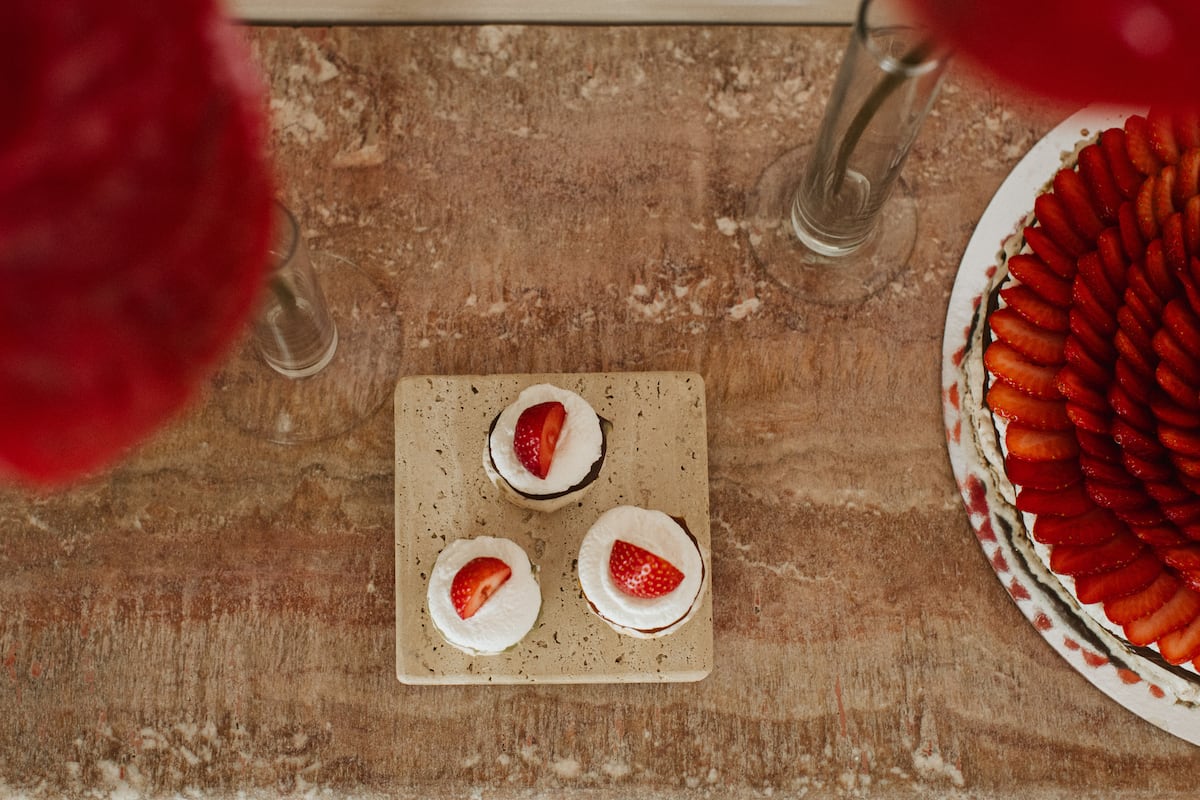
The cake that gives its name to the project summarizes that heritage well: a base of meringue, cream, nuts, fresh fruit and dulce de leche. A naturally gluten-free recipe that remains faithful to its origin, but is open to contemporary versions such as chocolate and hazelnut or pistachio.
The space, in Lagasca, reinforces that reinterpreted domestic sensation: soft tones, rounded shapes and an aesthetic that is reminiscent of a lived-in house, but with a modern look.
Brela is also born from a vital turn. “They shared the same desire: to leave routine behind and create something of their own.” That decision translates here into a place where everyday life is elevated without losing closeness to the residents of the Salamanca neighborhood.
The sandwich that Madrid missed
There are places that are born from a very specific intuition. At Grab (Travesía de San Mateo, 16), the premise was clear: “We felt that Madrid was lacking a good place specialized in sandwiches.” This is explained by its founders, Madeleine Martin and Emerik Minost, who looked to cities like New York or Paris to build a concept that here, curiously, still had no equivalent.
The result is a small space, with a seventies soul, where color and music accompany a proposal designed—above all—for on-the-go. Although there are tables, your thing is to leave with your order in hand and follow the plan outside. They themselves suggest it: an improvised picnic in the Plaza de Santa Bárbara or a walk through Justicia, one of those neighborhoods that you always want.
It is recommended to order the cheese with onion, the chicken kimchi and the oxtail, which comes accompanied by meat juice. “We did not expect products to be sold out in the first weeks or to see queues from the beginning,” says Martin. The average ticket is around 20 euros, drink included.
The liturgy of freshly made sweets
Krispy Kreme (7 Calle Princesa) in Madrid has not been so much an opening as a small phenomenon. Even before it opened, there were people waiting. “Hundreds of followers began to gather…, some spending the night,” they remember. At eight in the morning, more than 500 people were queuing to try their first hot glaze.
The hook is not just the product—that too—but the experience. The so-called Krispy Kreme Theater allows you to see live how the donuts are made, in a kind of hypnotic choreography that culminates when the red neon lights up: Hot now (hot now).
This signal indicates that the product has just been released and that it is the exact time to try it. The average ticket is 10 euros. Going when the neon is on is not a minor detail: it is, according to them, the difference between trying it and becoming a fan.