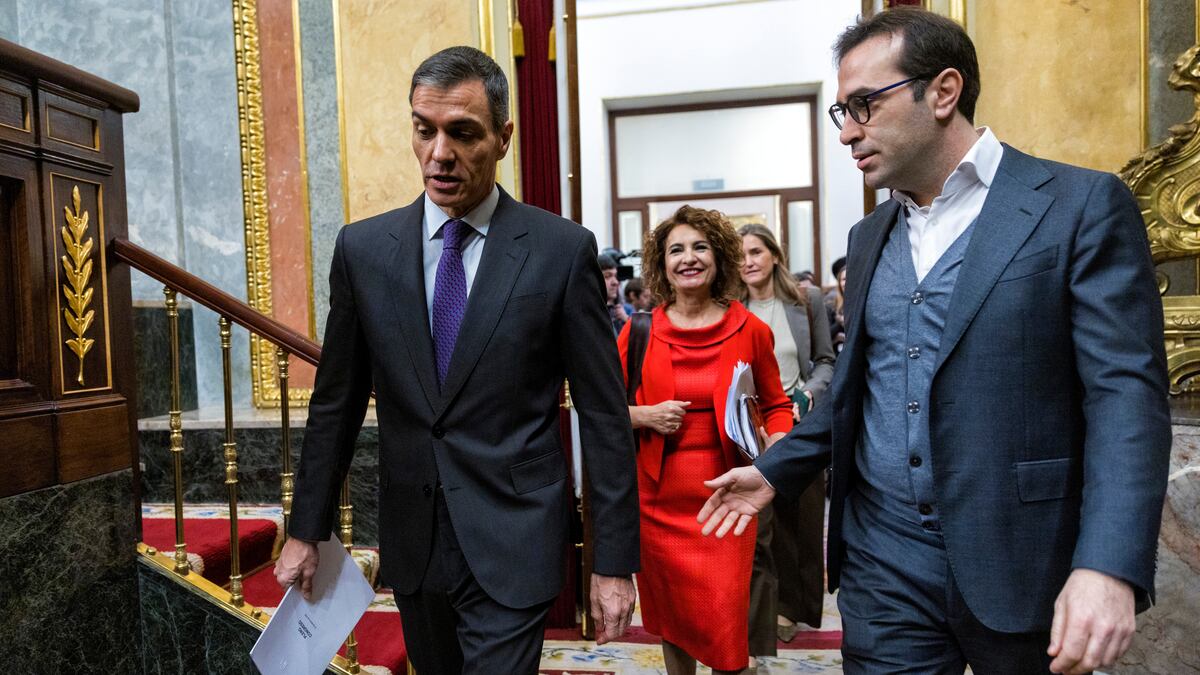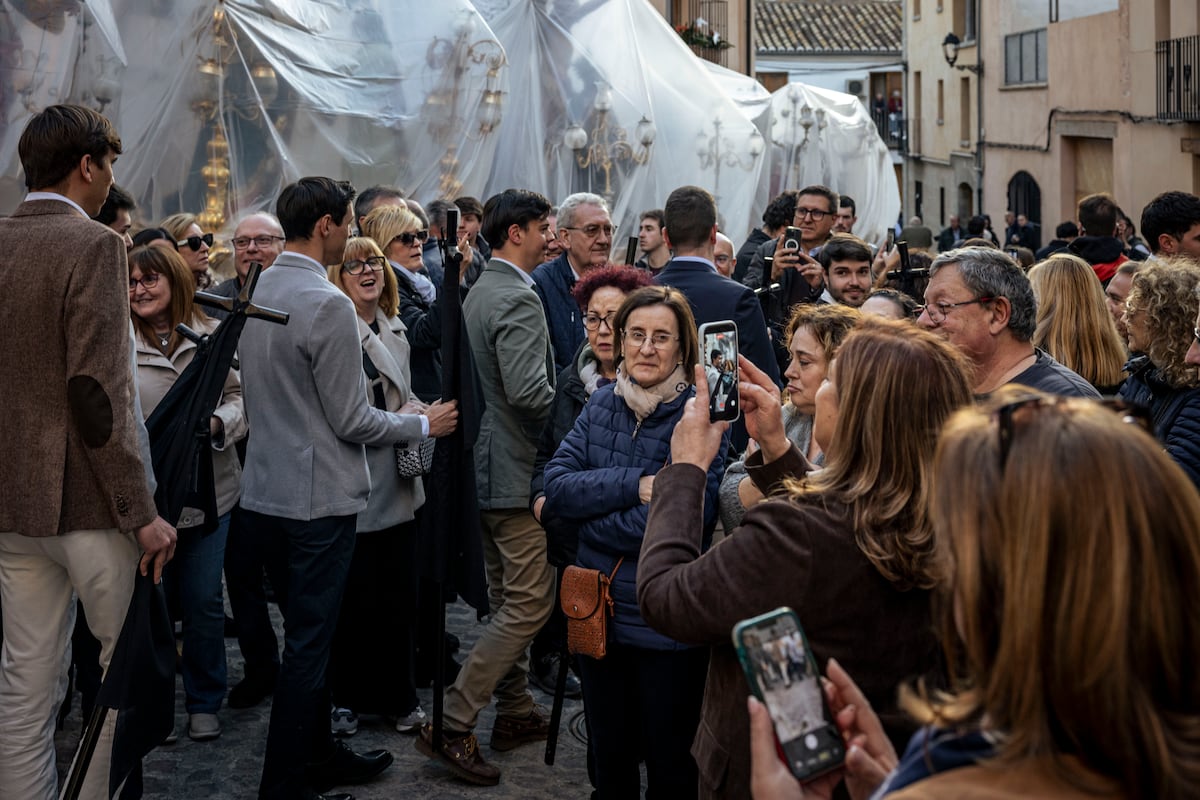
The archbishop of Valencia, Enrique Benavent, refuses to intervene in the controversy generated in Sagunto as a result of the rejection of the inclusion of women by the brothers of Holy Week. Archbishopric sources explain that “he is not going to promulgate a decree for the modification of the statutes of the brotherhood.” And they have pointed out: “The possible modification of said statutes must arise by decision of the members of the association, and the ecclesiastical authority believes in the pastoral convenience of accompanying this situation by seeking paths of dialogue and communion.” The statements are known on the same day that the mayor of the town, the socialist Darío Moreno, speaks out for the first time since last Sunday’s vote. He has recognized that it is a “very sensitive issue in a town dedicated to its main festival”, but He has encouraged “to be brave.” “Women cannot and should not be excluded from any area for the mere fact of being one,” he said.
The same sources from the Archbishopric point out that “the brotherhoods are associations of faithful that are governed by their own statutes, approved in accordance with canon law, and ecclesiastical discipline should not be exercised, as has happened in other dioceses, in which maturation processes have occurred, without situations of pressure, always through dialogue.” And they add that the institution believes it is appropriate to provide pastoral support, promoting the meeting. Finally, these sources indicate that “the Archbishopric asks that these dates of celebration of Holy Week can be lived in faith from unity and in communion.”
A reaction that comes only one day after the Ministries of Industry and Tourism announced the beginning of the procedures to revoke the declaration of a festival of national tourist interest due to the fact that the entire population cannot participate on equal terms. In addition, the department headed by Ana Redondo will study the statutes of the Puríssima Sang del Nostre Senyor Jesucrit brotherhood in case they violate the equality law.
In a statement, the mayor of Sagunto stated that “tradition and equality are not only compatible, but a guarantee for the future.” “It is time to be brave and take a step forward towards equality and inclusion,” said the first mayor. She assures that she has “always” respected the decision-making spaces of an autonomous organization such as the brotherhood over the years and that she has maintained a “direct” dialogue with several of the spokespersons for this group, both women excluded from their participation and brothers who want to promote the opening of the brotherhood.
In these conversations, he indicated, they have “always” agreed that it was “important” to avoid institutional intervention that would contribute to greater polarization of positions. “The leading role should have gone to ordinary women and brothers, no one else,” he stressed in this regard. Now, given the institutional and social magnitude that this situation has reached, citizens have expressed their concern, asking what the position of this City Council is.
In this sense, the mayor of Sagunto City Council has stressed that the “firm” commitment to equality and non-discrimination is reaffirmed, “fundamental principles of our legal system and democratic coexistence.” “Equality between women and men is a fundamental legal principle and an ethical commitment that appeals to all institutions, public or private, equally. Women cannot and should not be excluded from any field for the mere fact of being women,” she says.
“Full” participation of women
This positioning “does not represent an attack on tradition, nor on the brotherhood,” he clarified. “We express the utmost respect for the religious and cultural value that Holy Week represents for our city. It is much more than a holiday, it is a moment of reflection that invites us to be better and ask ourselves where we want to go as a society.”
“Saguntine Holy Week speaks of faith, heritage and identity; the full participation of women would only increase the greatness of the three elements. We are talking about a treasure that we must take care of together. That is why we also reject the voices that call us to act from revenge.”
From the mayor’s office, the first mayor said, the normal development of the events of this Holy Week in Saguntina 2026 will continue to be supported, in accordance with what is conveyed to them by “the main promoters of the group for the inclusive Holy Week in Saguntina, who must continue to be the main and only protagonists of this demand.”
Condemnation of the accusation
In his opinion, “it must be they and especially women, whose rights are at stake, who lead the way, who mark the times and the next steps.” And he added: “This point brings me to Mayoralía 2026. The media attention and the social unrest generated by this situation have been unfairly focused on this group of young people who have the enormous responsibility of leading the celebration of this centenary tradition this year. They are the highest representatives of the party this 2026, but they have not played any special role in the extraordinary voting process of the brotherhood.”
For this reason, he clarified: “We condemn any statement that does not contribute to the resolution of the conflict or reflect its complexity. We want to recognize that the Mayoralía has done a great job to elevate our festival and contribute its grain of sand towards excellence. I can only tell you that you have all our support to be able to live this Holy Week 2026 in the best possible way.”
Thus, he has called for dialogue and consensus so that, in compliance with the current legal framework, the brotherhood carries out the necessary changes. It also urges to preserve the recognition and prestige of Holy Week in Sagunto as a cultural and tourist reference. And asks the entities involved to open a space for constructive dialogue to guarantee inclusive representation in all areas of the festival.