




– Advertisement –
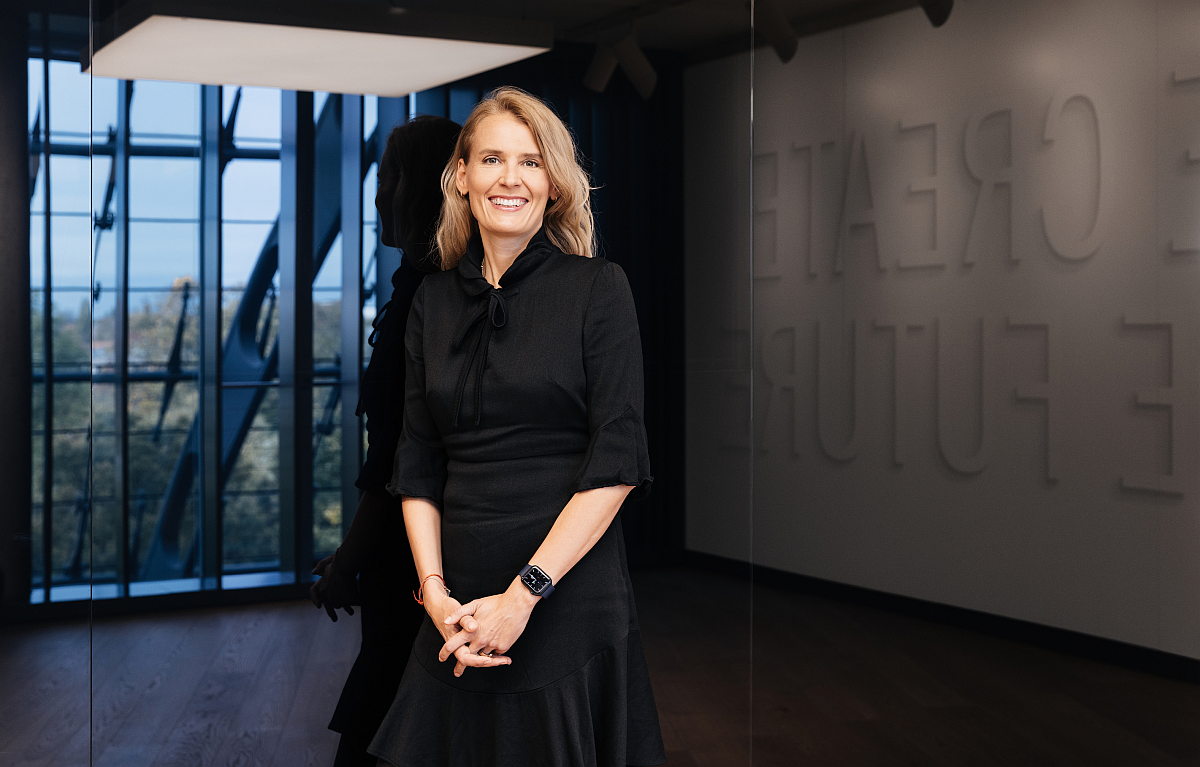
One company, over 100 locations, one common identity: How can corporate culture be scaled globally without leveling out local realities? Gabriele Fanta, CHRO at Körber, explains in an interview how HR as an enabling function systematically anchors leadership, trust and collaboration – and thus creates measurable value contributions.
Executive Summary
Scaling corporate culture globally
- The challenge: Culturally aligning over 100 locations worldwide means bindingly implementing global leadership principles while taking local realities into account.
- The solution: Körber consistently aligns its HR work with five leadership principles. Clear guidelines, a global leadership compass and decentralized implementation ensure that leadership remains internationally consistent and at the same time regionally effective.
- Your benefit: Gabriele Fanta shows how HR as a strategic management function makes measurable value contributions – through scalable leadership, clear governance and cultural resilience.
- Focus: Scaling corporate culture globally, HR Leadership at Scale, global leadership principles, HR governance, talent retention, cultural resilience.
The ability to scale corporate culture globally is a strategic competitive factor for internationally growing industrial companies. As geographical expansion increases, the risk of cultural fragmentation increases – between corporate headquarters and local units, between global standards and regional requirements.
In an interview with HR Journal, Gabriele Fanta explains how Körber orients leadership internationally with a global leadership compass, clearly defined leadership principles and formats such as “Culture Habits”. The aim is to establish common standards and at the same time maintain regional scope for action.
What does “HR Leadership at Scale” mean to you personally – especially in the area of tension between strategic management and local reality in over 100 locations worldwide?


Gabriele Fanta: Human resources, as the name suggests, are an essential resource for the success of a company. For me, this term – despite some criticism – represents real value creation. “People and Culture” describes the key to activating the human resource in the best possible way. Collaboration determines culture, the crucial currency for attracting, developing and retaining talent. This principle applies to our more than 100 locations internationally and not only to Körber, but to every company and every organization.
Employees experience culture in their collaboration with colleagues, but especially through their direct manager. This is where we come in at Körber: We have not only rolled out our five leadership principles worldwide, but we have actually aligned all our measures with them: from management diagnostics, all training courses and the coaching pool to internal and external assessments. This is how we make leadership globally scalable and create measurable value contributions.
How do you ensure that leadership and culture are perceived consistently by all employees?

Gabriele Fanta: With the introduction of the Körber brand in 2020, we turned everything about leadership from left to right. To ensure that good leadership can be experienced and implemented in a scalable manner, we have, for example, developed a leadership compass. With practical starting points for everyday management.
This was followed by a series of workshops to develop our cultural principles. The team traveled through all regions and took important stakeholder groups – from the group works council, employees in production and administration, to managers to the board of directors – to the roots of the Körber culture in always the same formats. The focus was on the question: What should our corporate culture look like and where do we want to be in 2030? That worked very well – our cultural core has been clear since 2023: trust and collaboration for the best performance in the spirit of our founder Kurt A. Körber.
In which HR areas do you see the greatest potential for leveraging global synergies – and where do you consciously focus on individual regional solutions?

Gabriele Fanta: HR is, first and foremost, an enabling function: We create the conditions so that business runs as smoothly as possible. I am very happy that the term overhead function is being pushed into the background. Because in fact we create value. An example: A wrong hire can cost a company dearly – this affects the application process, training and the costs that arise from the vacancy. An annual salary is then quickly gone.
We rely on uniform standards for everything that directly affects employees – of course in accordance with the respective legislation in the country. We achieve efficiency through shared systems such as a global human resources information system, a learning management platform and a uniform curriculum. Regional differences remain where local legislation and standards require different solutions. For example, we have local HR business partners who take care of all local issues that go beyond the classic services.
How do you ensure that employees at so many different locations around the world identify with Körber’s purpose and values - and that their commitment is maintained in the long term?

Gabriele Fanta: We rely on a mix of different formats and channels. We have now made the previously mentioned culture compass for managers available to all employees. One of my favorite formats is our internal podcast “Culture Talks”, in which very different employees, from managers to engineers, openly share their cultural experiences. We have also been sharing our so-called “Culture Habits” on the intranet for two years now, based on the principles in the book “Atomic Habits” – small impulses that promote individual and collective behavior change in the spirit of a good corporate culture.
An important component in cultural communication are our “Culture Coaches”, colleagues at the locations, often outside of HR, who, after a compact coaching training, shape our corporate culture on site based on our cultural principles and regional needs. In this way, we also receive continuous feedback for the further development of our work together.
Intercultural leadership often requires a change of perspective. What insights did you personally gain from this – and what attitude particularly helps you in global collaboration?
Gabriele Fanta: Intercultural competence comes from personal experience – ChatGPT or other AI tools cannot replace this. Unfortunately, enthusiasm for posting abroad has noticeably diminished. Almost 20 years later, I still benefit from my time in the USA – as well as from the professional experience in different industries, roles and global companies. Curiosity and openness are just as crucial as an often underestimated quality: that of observation. In everyday life I often experience that the hectic pace of time no longer develops this ability at all. However, anyone who observes and listens carefully in another country will pick up a lot. Adaptation and behavior change then occur almost automatically.
How has your experience in very different companies – from McDonald’s to Sixt – shaped your current role at Körber?
Gabriele Fanta: Through the different industries, roles and functions, I have definitely developed a fair amount of resilience. For me, the buzzwords change or transformation are in no way worrying, because they are simply part of it. If we take the corona pandemic, the geopolitical situation or even economic cycles – what is crucial for me is that we as managers are able to act and make decisions. This requires resilience, the ability to observe as described above and the freedom in the mind to develop new options for action. Persistence in the familiar rarely leads to success. And even in difficult times or when I make mistakes, a motto that I adopted from an experienced HR colleague helps me personally: “Keep going.”
What issues and challenges do you see global HR organizations like Körber facing in the coming years?

Gabriele Fanta: A challenge that applies to our business areas as well as to the HR organization are geopolitical developments. The corona pandemic has shown us how quickly general conditions can change. That’s why we need an agile and, above all, adaptable, powerful organization. International cohesion is equally important, especially when the external environment is changing so rapidly. Added to this are demographic developments in many countries and the growing shortage of MINT specialists. On the other hand, our international positioning means that we at Körber are also able to react to the maximum extent possible – that is a very positive outlook for me!
The interview was conducted by Helge Weinberg, publisher and editor-in-chief of the HR JOURNAL.
HR Beyond Borders: Bridges between markets, cultures and HR realities
The interview with Gabriele Fanta is part of our ongoing series “Global HR Leadership at Scale,” which looks at how international organizations lead, scale and manage HR, talent and mobility across borders in an increasingly complex global environment. The series was launched in 2025 and will continue in 2026 under the overarching editorial framework “HR Beyond Borders”.
The series began with leadership insights from Kameshwari Rao (Publicis Sapient), followed by a strategic analysis of how German SMEs can build sustainable success in India, based on the perspectives of Rahul Oza and Simone Puddu (Rödl, Pune/Bangalore). Further leadership experiences were contributed by David Heffernan (Cognizant) and Thomas Wolf, Ingo Todesco and Kelly Stolz (KPMG), complemented by practical insights into scaling global HR systems with Mirabela Ionescu and Milan Battisti (Nagarro).
Global Capability Centers in India were the focus of a contribution by Rupert d’Mello (Cognizant), Michael Baier (Michael Page & Page Contracting) explained near- and offshoring strategies for IT talent, Apoorva Singh (Rödl, Pune) described labor relations and governance in India, Yuri Akahira (Staffbase, Tokyo) gave insights into the changing work culture in Japan.
The recent interview with Sindhu Gangadharan, Managing Director of SAP Labs India and President of the Indo-German Chamber of Commerce, sent a special signal. Under the title “India as Germany’s Strategic Innovation Partner” it analyzes the growing strategic importance of India for German companies – especially in the context of innovation, talent and trust-based leadership.
Also read the following posts:


