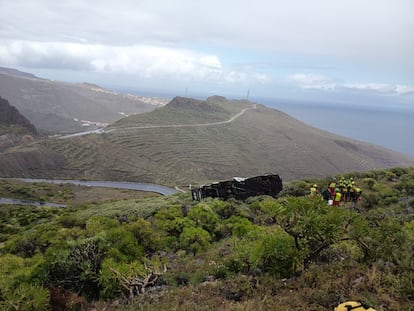

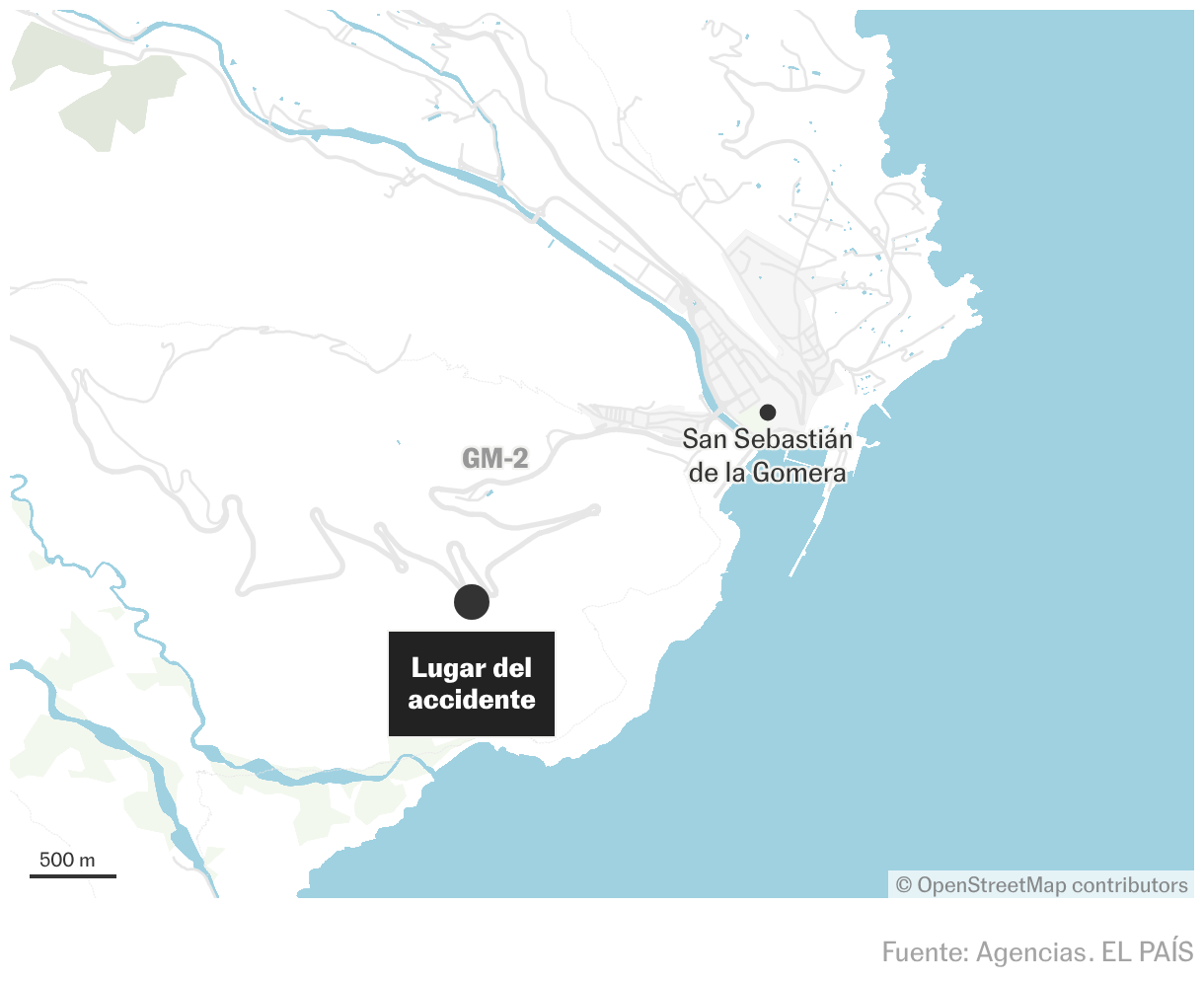
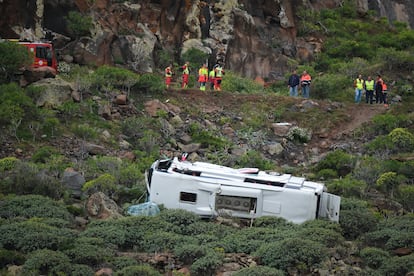
One man has died, four other people have been seriously injured and another 23 moderately injured when the bus they were traveling in crashed on the Canary Island of La Gomera. The bus, belonging to the Gomera Tours company and transporting tourists, has plunged down an embankment at kilometer 2 of the GM-2 highway, near the capital, San Sebastián de La Gomera, according to sources from the Security and Emergency Coordination Center (Cecoes 112). The first official information points to a possible brake failure as the cause of the accident.
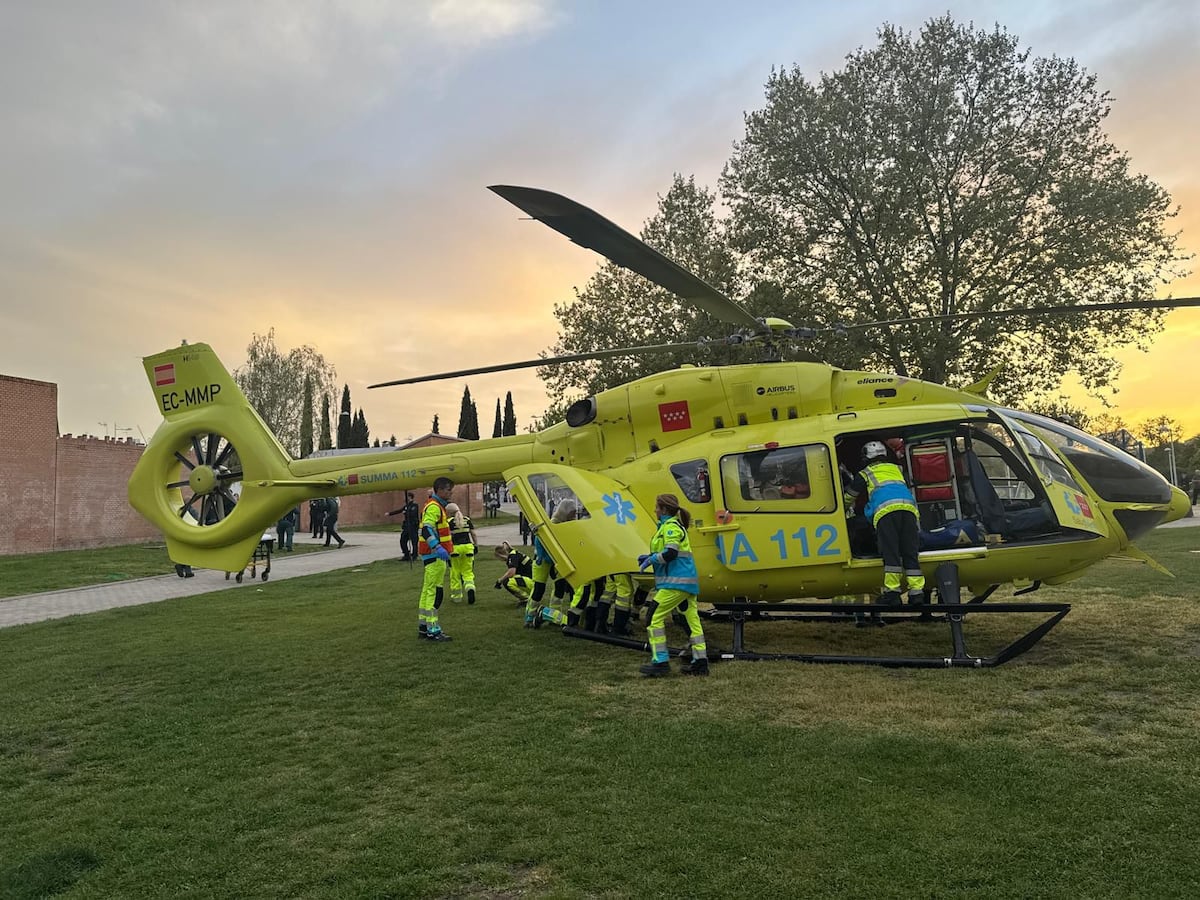
The event was reported after 1:15 p.m. this Friday. There were 27 people on the bus—including three minors, who were unharmed—all of British origin, in addition to the driver. The age of the deceased has not been revealed. Two other men, aged 73 and 42, were seriously injured with multiple trauma and were initially evacuated in ambulances from the Canary Islands Emergency Service (SUC) to the Nuestra Señora de Guadalupe Hospital on the island, from where they were later transferred in medical helicopters to Tenerife. The rest of the injured have been treated at the island hospital.
The vehicle came from Playa de Santiago, a tourist town in the south of the island, and was heading to the capital to later travel by boat to Tenerife. The Civil Guard is considering a failure in the braking system as the main hypothesis of the accident. This is what the insular director of the General State Administration, Juan Luis Navarro, told journalists at the scene of the events, according to Efe. Navarro has reported that the driver “tried to fight” since he detected the brake failure but finally the vehicle fell down the hill. The driver is an experienced professional and is familiar with the route, according to sources from Gomera Tours, who add that it is a route that “is done practically every day”, like others operated by the company. “It is a miracle that there have not been more fatalities,” the island’s Minister of Territorial Policy, Environment and Primary Sector stated in statements to regional television from the site of the accident.
After the accident, which occurred in the vicinity of the island’s landfill, Cecoes 112 proceeded to mobilize several emergency resources to the area, where they treated several injured people. Several ambulances from the Canarian Emergency Service, a medical helicopter and another from the Civil Guard and a third from the GES (emergencies of the Government of the Canary Islands) and police resources, among other personnel, are operating at the site.
The Government of the Canary Islands declared at two in the afternoon the alert situation due to an accident involving multiple victims on the island. The Cabildo has already restored traffic, although it asks to maintain maximum caution throughout the afternoon, since specialized personnel will continue to carry out maintenance and security tasks.
The president of the Canary Islands, Fernando Clavijo, has assured in his X account that he is “pending” the accident “and the tasks of the emergency teams that are intervening at this time.” The Minister of Territorial Policy and Democratic Memory (and former president of the Canary Islands) Ángel Víctor Torres, also spoke out on the same social network. “Tragic news in La Gomera,” he wrote in X. “With a heavy heart. May there be no more victims.”
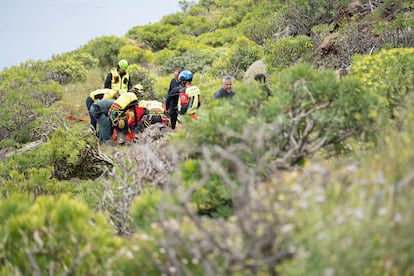
This is not the only accident that has occurred in the last year on this same stretch of this road on the small Canary Island. In May 2025, a bus from the Island Council’s regular service that had left 40 minutes before Playa Santiago (south of the island), left the road at kilometer 3, overturned and fell from one track to another. As a result, a 73-year-old woman died and ten other people suffered injuries of varying degrees.
The island of La Gomera (22,560 inhabitants) is the third least populated of the archipelago (only surpassing El Hierro and La Graciosa). It has three main roads. GM-2, where the accident occurred, is almost 34 kilometers long. It leaves from the capital, San Sebastián de La Gomera, and crosses the Garajonay National Park. Despite the good condition and updating of the roads, its terrain is extremely steep and greatly complicates driving.
Despite its small size (370 square kilometers, the third smallest), the island closed 2025 with 713,000 tourists, according to data from the Cabildo, and reinforces its strategy to strengthen the national market as a strategic issuer.