


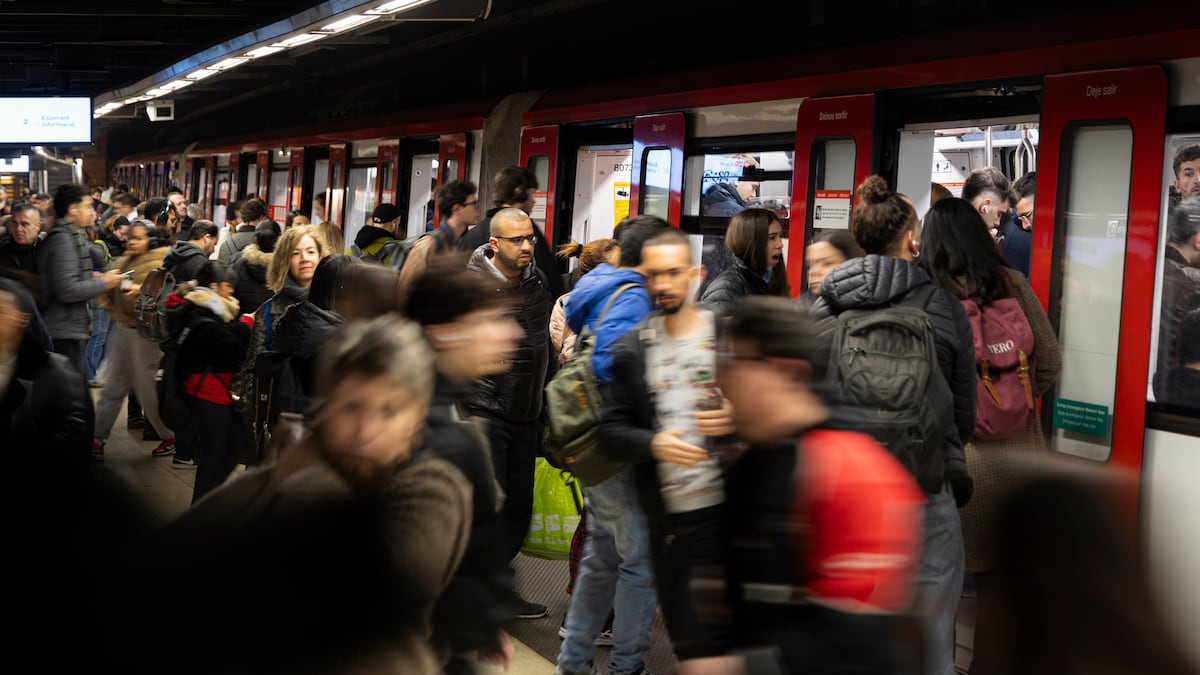

Susana lives in Ciudad Lineal, the Madrid district where most of its residents are treated at the Ramón y Cajal Hospital, but for which they do not have direct public transportation, being forced to make several transfers in a journey that often exceeds 60 minutes. She has always suffered from this situation, although since she became an oncology patient, as a result of being diagnosed with cervical cancer, she suffers from it more. He still remembers the odyssey to receive his 72 radiotherapy sessions. “The ambulance service worked very poorly and I had to take the subway until I could get on the bus that dropped me off at the health center. I was immunosuppressed in the middle of a flood of people,” recalls the 43-year-old woman, who prefers not to be identified to face her illness discreetly. The situation has not changed, despite the fact that the mayor of the capital, José Luis Martínez-Almeida, promised to tackle the problem.
He stated it in writing in point 115 of the electoral program with which he participated in the 2023 municipal elections: “We will create a new bus line that connects the Ciudad Lineal district with the Ramón y Cajal Hospital, with its head in Alsacia, covering Hermanos García Noblejas and later, through Arturo Soria, it would join the M-11 to the hospital.” It is a historic neighborhood demand that was assumed by the PP of Ciudad Lineal and has been defended by its councilor Nadia Álvarez Padilla. The Municipal Board that he presides has approved on several occasions the request to start up the line. However, the Madrid Regional Transport Consortium assures this newspaper that they are not aware of any request in this regard from the municipal authorities.
“On December 15, representatives of our entity held a meeting with the Ciudad Lineal Neighborhood Association, in which, for the first time, the request to establish a direct bus line between the district and the Ramón y Cajal Hospital was conveyed,” they comment. His response provokes the indignation of the San Pascual, Quintana, San Juan Bautista, El Sol de la Concepción, Barrio de Bilbao and Pueblo Nuevo resident groups. They feel cheated. They report inattention, delays and constant lies. “The councilor has been indicating for two years that the appropriate procedures for this new line are being carried out,” they say.
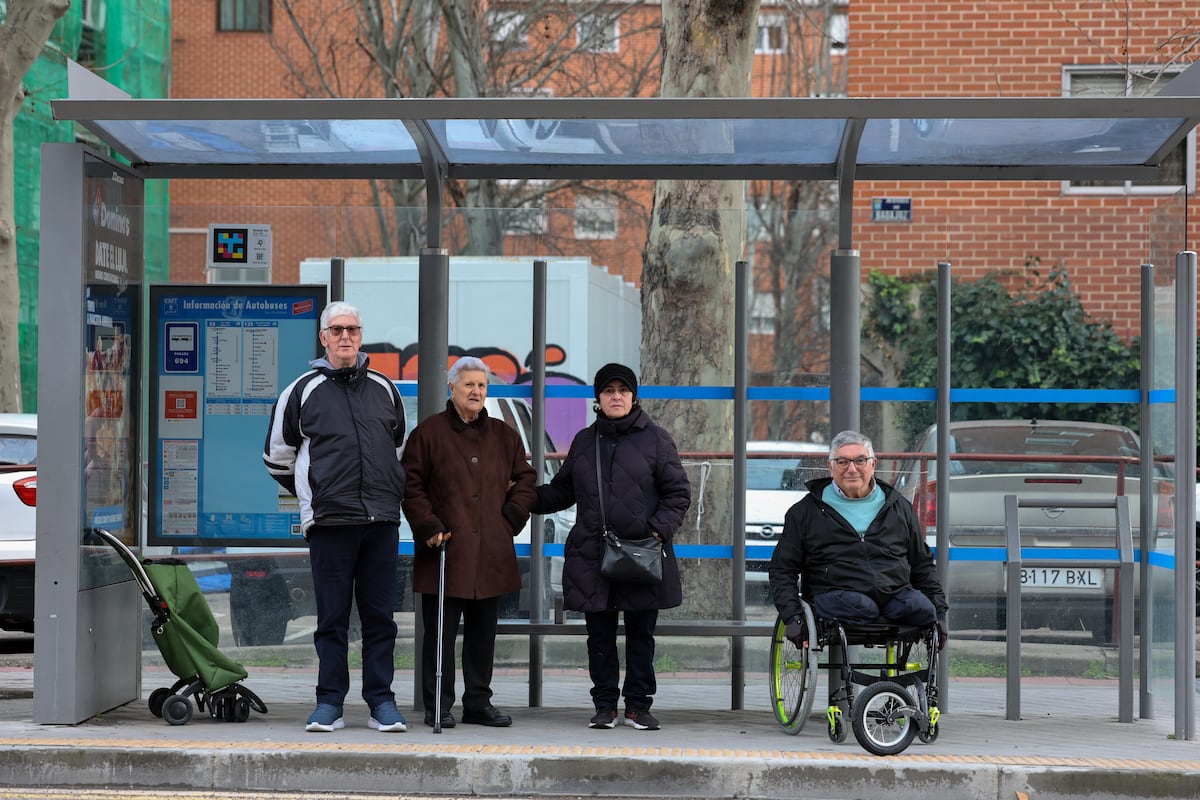
They have been demanding the opening of the route for three decades. “Despite being the oldest district of the areas in the eastern part of Madrid served by this health center, we are the only ones that do not have direct transportation. Are our lives worth less?” ask the five neighborhood groups mentioned, who are in the neighborhoods through which the highly demanded express bus would pass. 33,000 residents of these areas are over 65 years old, according to municipal data from 2025. If the direct route is launched, 148,000 residents will benefit.
From the Madrid City Council they limit themselves to saying that the Regional Transport Consortium is already evaluating the proposal and Álvarez Padilla assures that he has been working for a year and a half with the municipal delegate of Mobility, Borja Carabante: “I have met with him in his office and we are seeing what is the best route to reach the largest possible population. Until now, there have been other priorities such as reinforcing the fleet and personnel to be able to launch the route. It will be the delegate who transfers the consortium the proposal based on the field work carried out.” It does not specify when the direct route will be enabled. “I can’t say if within two months or half a year, but it will be a reality before May 2027, when the legislature ends,” he says.
The public health map in the capital shows a large desert on almost the entire eastern flank of the M-30. The main street in this area is Arturo Soria, whose boulevard is the headquarters of six private hospitals in full operation and a seventh under construction, owned by the president of the healthcare giant Quirónsalud. It will be built on the same empty lot where for years it was thought that the large public hospital of the east could be located, much in demand by the neighbors, but non-existent.
Patients and healthcare workers complain about the saturation of the Ramón y Cajal, affected by long waiting lists. It is the public hospital in Madrid with the largest assigned population, 606,454 people, according to the latest available data, as of January 1, 2023. That is, almost one in five Madrid residents in the capital was assigned to that center.
Susana still remembers the hot days, “when some bus passengers got dizzy and the ambulance had to come halfway to treat them.” She took a pill before starting the odyssey to reach the Ramón y Cajal Hospital with the aim of not fainting in the attempt. He assures that if the going is bad, the return is much worse: “The bus goes around San Blas a thousand times. It can take 90 minutes to get home. I was losing three hours a day between the subway and the bus for a quarter of an hour of radiotherapy.”
María Jesús Peña, a resident of the San Pascual neighborhood, understands it perfectly. He suffers from spinal deviation and bilateral sciatica, as well as four lumbar disc herniations. Therefore, when he has to go to the hospital, he uses a taxi. Last year he did it once a week for nine months because of bacteria in his leg. “The first time I paid 40 euros for the round trip, then I started trying different applications to see which one was cheaper,” explains the 59-year-old woman.
Sometimes her husband could take her by car, but he would not go with her to the appointment because it was impossible for him to find a parking space. “He stayed hanging around until he came out,” he says. If he wants to go by public transport, he must get on three different buses, which is not feasible for him due to his multiple pathologies. This journey is well known to Susana Aguilera, 59, who accompanies her 84-year-old mother to the hospital. She recognizes that the journey becomes an obstacle course: “When I have to go with her, who cannot see well, and with my brother, who has a disability, I end up exhausted. For them it is also a beating.”

Delays on the current route with transfers are frequent. This month, Gemma Peris phoned her children’s doctor to let her know they were late for the appointment. “If we miss the appointment, it takes months until we get another one, since health care is as it is,” protests the 51-year-old woman. She is outraged that her children have to miss a school day when they have a medical check-up. If your husband takes you by car, you must leave the vehicle at the Pitis station and get on the train to get to the hospital due to parking difficulties.
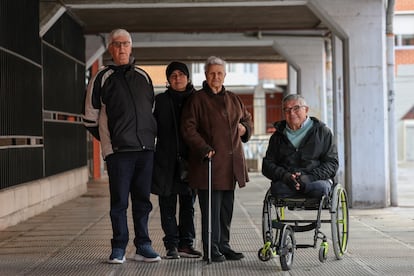
Accidents are not unusual either. Pablo González, 65, has already fallen more than once on his way to the health center: “I have to get on two buses and travel in the wheelchair for 20 minutes along the sidewalk.” His legs are amputated: “If the slope of the bus ramp is steep and no one holds me from behind, I’ll run away.”
Neighborhood anguish is also shared by Ana Guijarro, a resident of Pueblo Nuevo. His octogenarian father was never afraid of the stairs or the basement of Madrid, but a year and a half ago, while cleaning, he found an appointment with the urologist in the garbage: “He confessed to me that he does not want to go to the hospital, the subway is no longer for him. He gets disoriented and the trip tires him. And the bus is impossible, it takes a long time and he is uncomfortable, an hour standing. So he decides not to comment on anything so as not to force us to take him and lose days of work. He prefers to sacrifice his health to avoid have a bad time. With a pension of 951 euros it is difficult for him to spend 30 on a taxi.”
