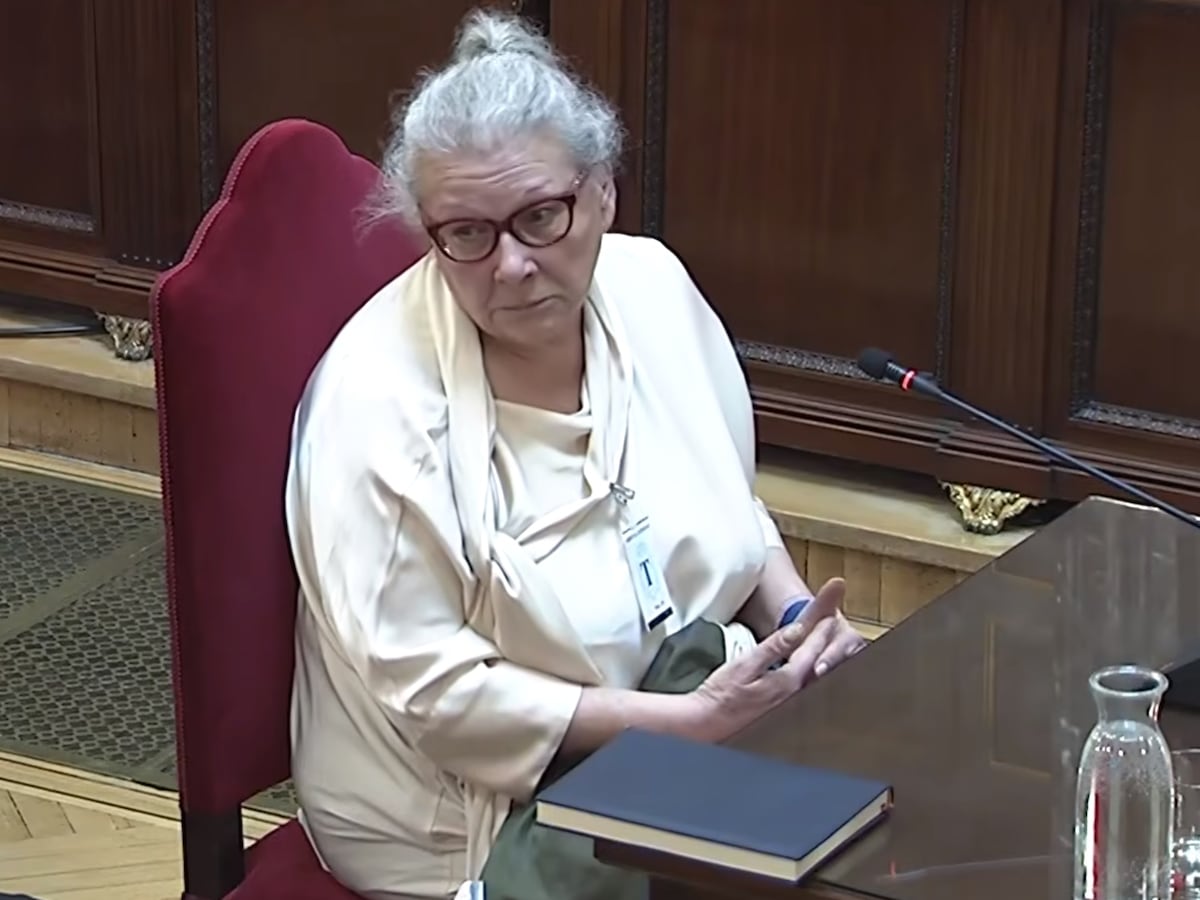



Carmen Pano, white hair tied in a ponytail and glasses, light clothes, sits down to testify with her coat on her knees and remains like that for a good hour. It is a complex art to sit in front of the judges of the Supreme Court. We should all sit there at some point in our lives, even with merit. There are witnesses like Claudia Montes who sit as if they were at a desk and crane their necks to see the blackboard better; Joseba, Koldo García’s brother, sat on his side, resting one hand on his leg as if he were in a txoko; Carmen Pano sits right now as if she were on the subway. Every time someone asks him a question, he looks at them as if he were announcing the stop.
Pano comes to talk about money in bags. That always makes a lot of impression. Bags of money, “wads of bills” his driver called them first thing in the morning, wads. These are things that we know are there, but you have to be a businessman, drug trafficker or politician to touch them. Once I went to see an apartment to buy and the guy suggested that I pay 50,000 euros in cash. I was very curious and asked him how it was done. My ignorance in money matters any day takes me to the National Court. Well, he told me that little by little I had to accumulate that money at home (I held back my laughter) and then, here was the key moment, I had to take it to him in a bag. A sports bag. I get arrested sooner for going to the gym than for wearing 50,000 euros in black, but okay. What I mean is that money moves naturally through banks: when it leaves that circuit, when it hides from the Treasury, it has to be moved, physically displaced. You have to carry it. And how is that money loaded? That is what Carmen Pano came to explain to the Supreme Court. Businesswoman and bag lifter.
Pano said that he had twice taken 45,000 euros to the PSOE headquarters, on Ferraz Street. 90,000 in total in two trips. How much does 90,000 euros weigh? Double 45,000. It was money, he said, that meant opening doors to obtain a license for a hydrocarbon operator. The money was given to him by Víctor de Aldama, he said. Here comes something very fun. The first time he went to Aldama’s office on Alfonso XIII Street, and there Aldama asked him to please go take a bag of money to Ferraz. Because, attention, he had a lot of trouble in the office and he couldn’t. And what did Pano, a veteran businesswoman, seem to have fought on the thorny frontiers of life among scoundrels? Take the bag, call a taxi and leave for Ferraz.
I’ve gone to Google Maps: it’s about 20 minutes by taxi from Alfonso XIII to Ferraz. Maybe the race will cost 20 euros if there is a lot of traffic. What did Pano do? Did you open the bag of 45,000 euros and take out a bill? Did you leave a tip? How was she sitting, with the bag next to or on top of her legs, hugging the bag or did she have it at her feet? Did you give it to the taxi driver to load in the trunk? Did you put a seat belt on the bag? Did the taxi driver see the 45,000 euros and think he had to take that lady to New Delhi?
Another day, Pano showed up at Aldama’s office again, and Aldama asked him to do him a favor: to bring Ferraz another bag of 45,000 euros. Pano’s glasses almost fell off. Is this guy serious? He asked him why he didn’t take her. And attention: Aldama told him that he had a lot of trouble that morning, and that he couldn’t leave the office. What do you think Carmen Pano did? Explode, naturally. “I told him it was the last time I did him that kind of favor.” And he took the bag and left. You can’t explain this country to anyone, it is an experience that you have to live at some point in your life, like the propofol they give you for a colonoscopy. Let yourself go, relax your muscles, close your eyes, think of Carmen Pano going from one side of Madrid to the other with bags of money, bags probably from Pryca, bags that still smell of fruit and yogurt, kicking the stones with a tremendous tantrum: “I’m busy, I’m busy!” He goes to Alfonso And there goes Pano ahead through Madrid with a belt full of bullets asking for Kevin Fernando Perdomo.
That second time, instead of calling a taxi, because it wasn’t a risk of going broke, Carmen Pano called her driver. The driver’s name is Álvaro Gallego and he declared before Pano: “It was a transparent, white bag, stuffed inside another larger bag and I know there was money because Pano’s bag was open, then the other one became transparent and there were wads of bills.” So Pano was walking around with his bag open.
What did he do when he arrived in Ferraz? the prosecutor surgically asked him. Both times, Carmen Pano said, the same thing: she passed through the door without any problems (like she would have if she went with the bag open) and, upon reaching the second floor, she gave the bag to a man she didn’t know at all. It is likely that a countryman from Viveiro, a militant who went to Madrid to greet his niece who works on the guarantee committee, called the elevator one day and a crazy lady came out leaving a bag of 45,000 euros in his hands shouting “the last time I do this, the next time he will come.” Today the man has two pharmacies in the A Mariña region.
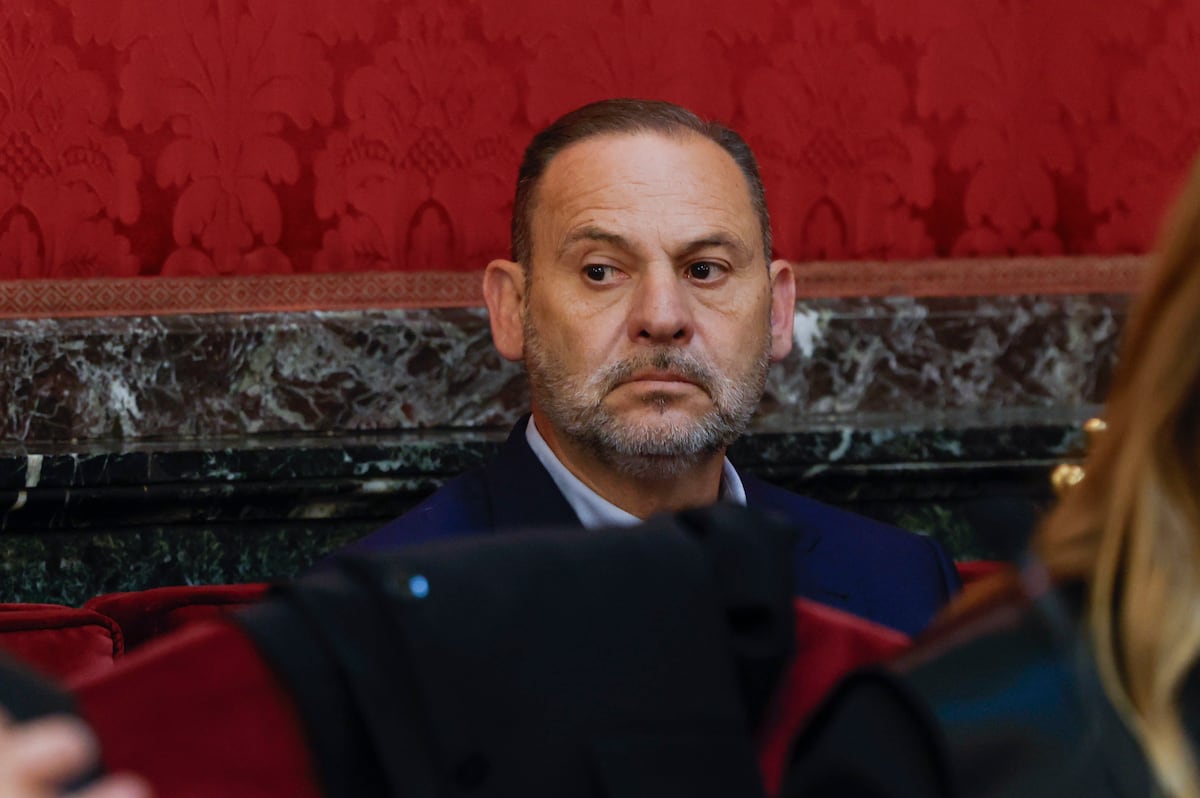
Carmen Pano had a relationship with Víctor de Aldama of “today for you and tomorrow for you too.” Aldama, in the dock. She listens to her old friend’s statement without blinking. He has a cross pin on his lapel and a silk handkerchief sticks out of his pocket. She looks like she’s thinking: “When didn’t I make trouble for her to sit here for me?”