



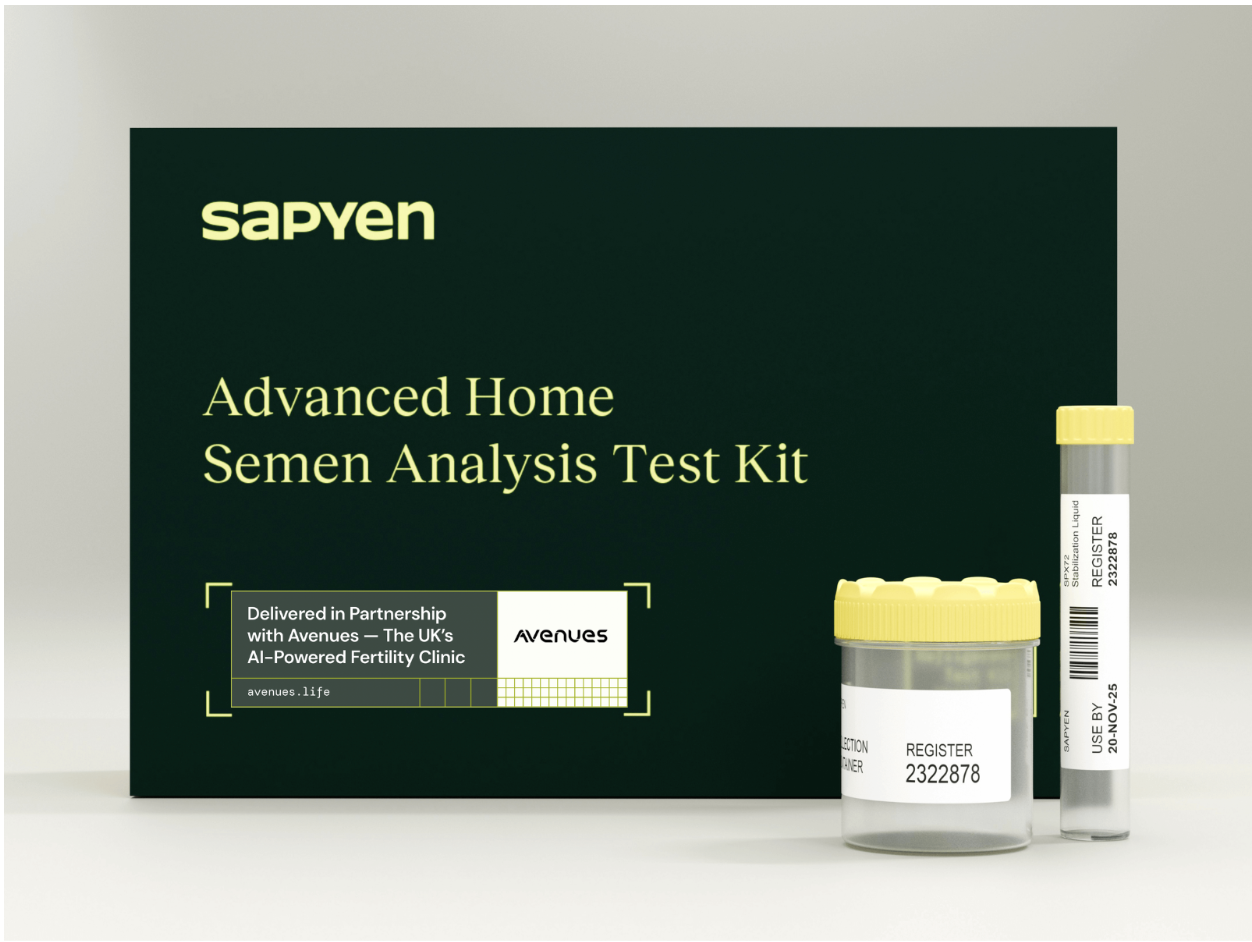
The early stages of fertility treatment in the UK are evolving with the introduction of a new testing approach that places both partners at the centre of the diagnostic process. A leading clinic has redesigned its patient pathway so couples can complete initial fertility screening at home before visiting the clinic.
Avenues Clinic has partnered exclusively with Sapyen to embed home-based testing into its fertility assessment process. The system enables men to perform semen analysis at home while women complete Anti-Müllerian Hormone (AMH) testing remotely.
Through the clinic’s Reproductive Intelligence Review programme, couples now begin the fertility journey by carrying out baseline tests from home. This allows them to attend their first consultation already equipped with key clinical insights.
The approach is particularly beneficial for patients travelling from across the country to seek treatment at Avenues. Many are looking for options such as Fair IVF or clinics that do not impose strict BMI thresholds, and remote diagnostics significantly reduce the need for repeated early visits.
The new model also responds to a persistent issue within fertility medicine. Despite male factors contributing to roughly half of infertility cases, diagnostic testing has historically been uneven, often focusing more heavily on women and taking place primarily in clinic environments.
Men frequently undergo testing later in the process and may be required to deliver samples to clinics within short timeframes. These constraints can slow down diagnosis and lead to incomplete information during early consultations.
With the updated pathway, couples carry out initial testing together from home. This enables clinicians to receive critical data earlier, allowing the first consultation to focus on treatment planning instead of basic diagnostic investigation.
“The fertility journey shouldn’t start with waiting rooms and logistics,” said Dr Cristina Hickman, CEO of Avenues Clinic. “It should start with understanding. Our Reproductive Intelligence Review allows couples to complete essential diagnostics from home so that when they arrive, the conversation focuses on decisions rather than discovery.”
Sapyen enables the process through its patent-pending sperm stabilisation technology. The system preserves semen samples for up to 72 hours following collection, allowing them to be transported and analysed accurately without immediate clinic submission.
“Fertility outcomes suffer when the system delays information,” said Ash Ramachandran, CEO of Sapyen. “The question should never be why couples waited months to understand half the equation. Start with data. Reduce uncertainty early. Everything downstream improves.”
According to clinicians at Avenues, the introduction of early at-home diagnostics is expected to reshape the structure of patient consultations. With baseline results already available, discussions can move more quickly towards planning appropriate treatment.
The model also changes the way infertility is approached by recognising it as a shared clinical concern from the start. Male fertility testing becomes part of the initial diagnostic process rather than a follow-up step.
For patients, the benefit lies in quicker answers and a more streamlined pathway into care. For clinics, the change allows resources and clinical expertise to be focused more directly on treatment.
In practice, the redesign places the most important element — early diagnostic insight — at the very beginning of the fertility journey.