



Tears, cries and boxes of clinex. The awarding of medals on the occasion of February 28, Andalusia Day, a television gala where there is more singing than talking, was marked by two strong impacts that occurred in Andalusia in just one month: the Adamuz railway accident (46 deaths, 126 people treated, of which seven are still hospitalized) and the succession of storms that have caused numerous damages and forced the town of Grazalema to be evacuated.
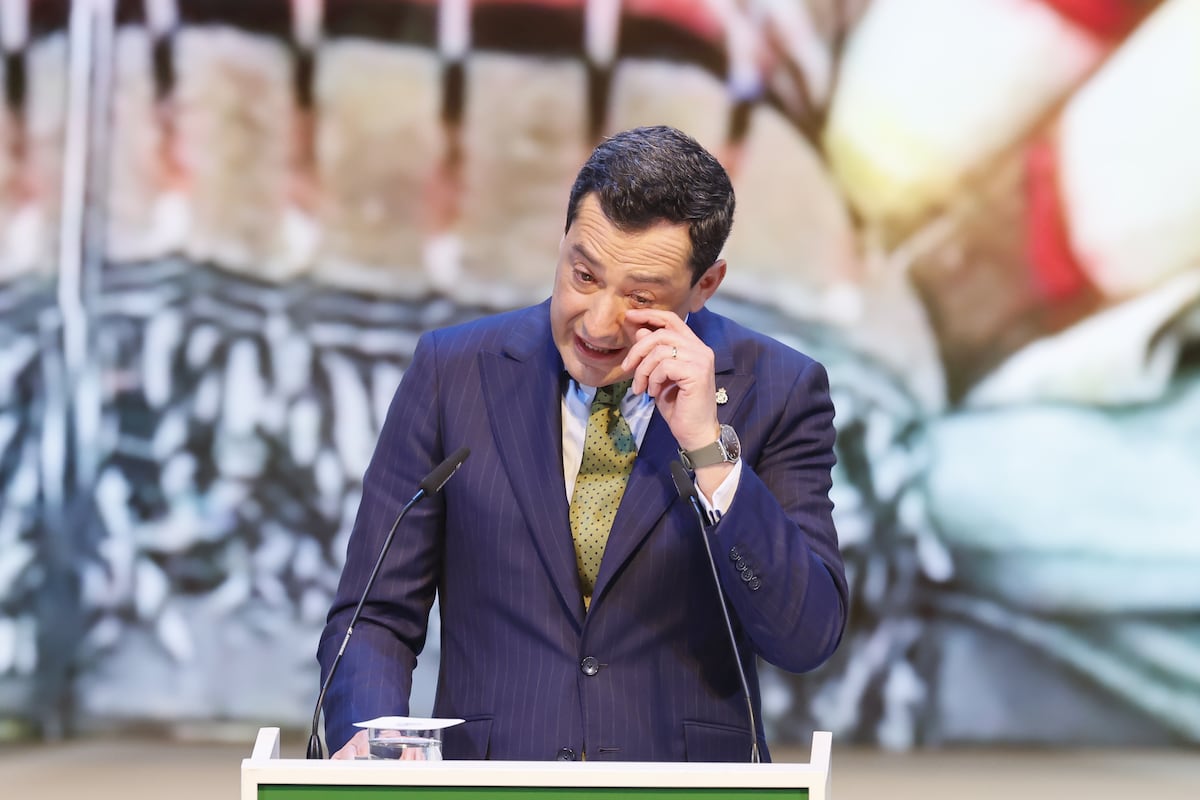
One of the winners cried as always, the model Eva González, who led the ceremonies in previous years and got emotional every now and then; and the president of the Board, Juan Manuel Moreno, and candidate for re-election in the next elections in June, cried like never before when remembering the first night at the site of the Adamuz accident. He could barely control himself, while the audience applauded him and the television focused for a few seconds on his wife, also very affected.
Moreno had the speech written. He didn’t improvise anything. He said what he had planned to say, but his voice didn’t suit him and tears ran down his face like a little child. It broke several times.
For some time now, the president of the Board has been exploiting his emotional and closest profile to the fullest, an image that was broken – it dropped a few tenths in rating – due to the health crisis due to breast cancer screenings, with which he did not publicly show this empathy. Moreno, who was smiling today in the electoral polls – may or may not lose the absolute majority; the PSOE collapses; and Vox’s high – he has not even made a protest speech.
There is no financing system that beats the power of a leader wrapped in tears when he assured: “Many have been surprised by the behavior of the Andalusians. They have sent it to me and it strikes me that it is surprising, because the Andalusians have simply done what is normal…”. He did not even tell the 1,800 people present in the Sevillian theater why they were there: to remember the referendum of February 28, 1980 by which Andalusia acceded to its autonomy by the same means as that planned for the historical communities.
Moreno appealed to banish “el malaje” and “malafollá”, two expressions that mean the same thing but that in Seville are said in one way and in Granada, in another. He called for “the revolution of joy” and dictated a new vital prescription: “Being good people gives quality of life.”
The singer Manuel Carrasco, the community’s favorite son, also cried, who could barely recover when talking about his family: “My father’s hands, a fisherman, my mother’s hands, picking strawberries, my grandmother’s hands, in the pot…”. Carrasco was in charge of singing the Andalusian anthem, a sober and heartfelt version that he performed with a guitar. “It hurts the Andalusian who doesn’t have it because he didn’t have it,” the Huelva native said.
Before the box of tissues ran out, actress Paz Vega also went up excitedly to collect her distinction as favorite daughter. Emotion also arose when the mayor of Grazalema, Carlos García (PSOE) and the mayor of Ronda, Mari Paz Fernández (PP), were recognized, although they did not receive a distinction, for working together “without ideology.”
The Maestranza stood up for five minutes when the medal delivery arrived to the town of Adamuz. The mayor, Rafael Moreno, some neighbors who actively participated in the rescue and a representative of the State Security Forces and Corps, firefighters, health workers and emergency services took the stage. More tissues.

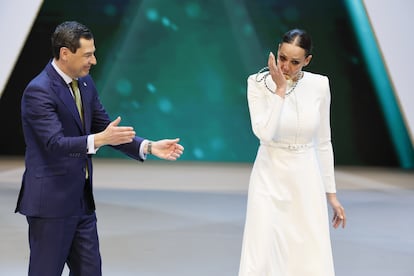
As favorite children, the Andalusian Government distinguished the Huelva singer Manuel Carrasco and the Sevillian actress Paz Vega (both already had the medal); the Museum of Andalusian Autonomy (dependent on the Junta); the Cadiz journalist Sandra Golpe; the engineer and director of Cybersecurity at Google, Bernardo Quintero from Malaga; the Sevillian group Cantores de Híspalis; the bullfighter Morante de la Puebla; the Malaga singer and actress Ana Mena; the Sevillian soccer player Olga Carmona; the Malaga karate fighter María Torres García; the executive president and CEO of Randstad Spain, Ana Requena; the founder and executive president of Secuoya Content Group, Raúl Berdonés from Granada; the researcher Rosa María Rodríguez Domínguez; Pediatric Palliative Care Units; the Sevillian model and television presenter Eva González; the CEO of Ingka Group (Ikea), Juvencio Maeztu from Cádiz; and the Sevillian businessman Luis Bolaños Figueredo.
Before the gala, the president of Parliament, Jesús Aguirre, presided over an extraordinary plenary session in which he made an electoral reading of February 28, with praise for “the stability” of the autonomous community. In the mouths of the popular, stability is synonymous with absolute majority and its antonym, “the mess,” as Moreno has said. Aguirre got into non-institutional trouble when he called for “the urgent improvement of the financing of Andalusia with an equitable model for all, far from principles of ordinality and non-consensual proposals” to “put aside the grievances of some territories against others.”
Listening to him in the guest area of the Chamber was the first vice president of the Government, socialist candidate for the presidency of the Board and architect of the reform of the financing system, María Jesús Montero, who did not attend the medal ceremony at the Maestranza Theater because she considered that this event has become “a self-aggrandizing gala” for the Andalusian president.
As in previous editions, Aguirre filled his speech with pseudopoetic overtones ―“Andalusia is the pulling of the anchor of those who leave and always long to return”―; He recalled the Adamuz train accident and the flooding in the community; and as a “defender of traditions” he highlighted in the balance of his presidency the assembly of a Nativity scene for Christmas. Aguirre also did not say a word about why Andalusians celebrate February 28. The opposition groups reproached him for not dedicating a word of remembrance to the women affected by the breast cancer screening crisis, as highlighted by the spokesperson for Por Andalucía, Inma Nieto. The spokesperson and deputy secretary general of the PSOE of Andalusia, María Márquez, described Aguirre’s speech as “embarrassing and embarrassing.”
