
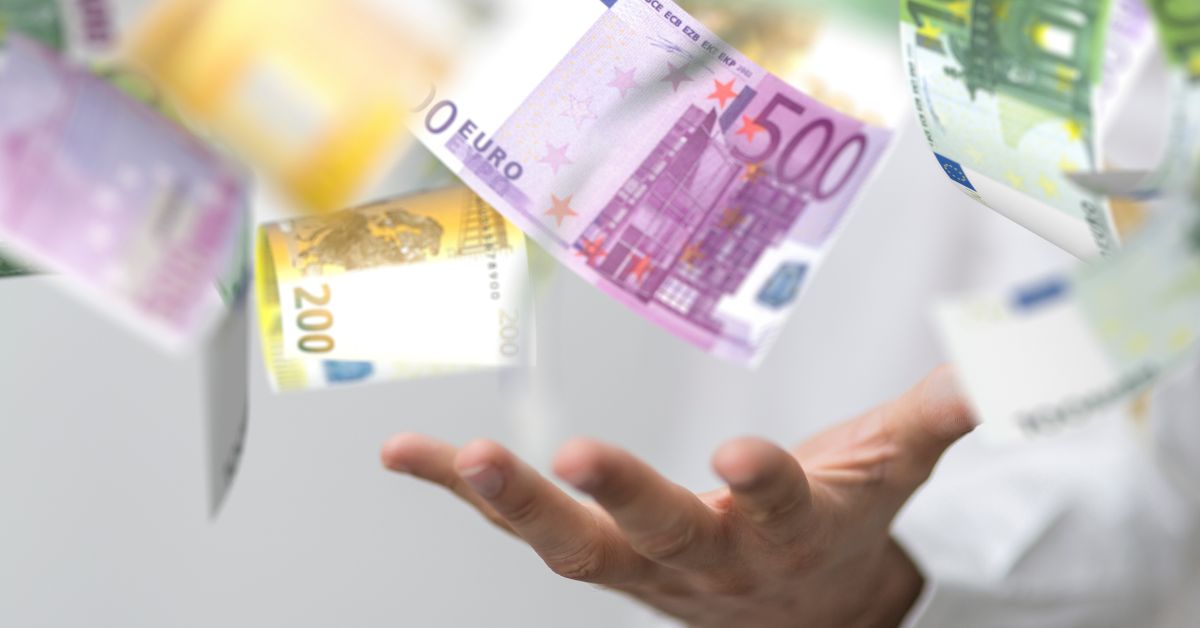
Let’s talk about money. 261.3 million euros – that’s how much the CEOs of the DAX companies earned together in 2025, 12.9 percent more than in the previous year. Seven of the top managers exceeded the ten million euro mark, top earner Christian Klein (SAP) earned an impressive 16.24 million euros. The increase was driven primarily by special payments and the increasing linking of remuneration to the share price. This arouses desire and, above all, envy: Why are the salaries of top managers increasing by a whopping 13 percent while employees have to haggle over every percentage point?
Critics have long complained that the ever higher top salaries in the DAX are widening the pay gap between the board of directors and the workforce. While CEO compensation rose, employee wages rose by only 4.2 percent in nominal terms. The growing CEO-worker gap and the increasing focus on variable, share price-dependent compensation are seen as problematic; some even warn against an “Americanization” of conditions.
In this way, employees can participate in the company’s success
It is cheap to point the finger at “those at the top” and criticize the salaries of top management. There are certainly opportunities for employees to participate in the company’s success – in the same way as top managers. Participation models, be it performance bonuses, employee shares or stock option plans, link the company’s success with the entire workforce instead of just with the board of directors. The effect is twofold: employees who participate in the growth are more motivated and loyal. At the same time, companies are positioning themselves as more attractive employers in the competition for talent.
The question remains: Why do so few companies still take advantage of the opportunity to allow their employees to participate in the company’s success? According to the Federal Association for Employee Participation (AGP), 70 to 80 percent of listed stock corporations in Germany offer participation models. However, these are not necessarily open to all employees and are often limited to managers.
From a macroeconomic point of view, the balance sheet when it comes to participation is even more sobering: it is estimated that only two to three percent of all German companies even offer participation programs. For non-listed companies – i.e. the majority of medium-sized companies – the equity instrument is simply missing.
But there are ways there too: profit sharing, profit bonuses or silent partnerships can be implemented without any corporate law effort. Since 2024, the whole thing has been additionally subsidized by the state with a tax-free allowance of up to 2,000 euros per year. The argument that participation models are too complex or too expensive is therefore becoming less and less valid. The instruments are in place and the legal framework has recently even been improved. What is often missing is the will among companies.
HR must take action
Human resources managers find themselves caught between two chairs in this debate: on the one hand, they negotiate wage increases for the workforce – and at the same time prepare the compensation reports for the supervisory board. But it is precisely this dual role that makes HR the decisive authority when it comes to not only managing participation models, but also strategically implementing them. This requires the will to take action against resistance within the company. In the long term, this commitment pays off: not only for the employees’ wallets, but also for the HR function, which can strengthen its own position in the company with a self-confident demeanor.

Sven Frost is responsible for HR tech, which includes the areas of digitalization, HR software, time and access, SAP and outsourcing. He also writes about recruiting and employer branding. He continues to be responsible for the editorial planning of various special human resources publications.